







Oxycodone’s half-life, the time your body needs to clear half a dose from your bloodstream, runs about 3.2 hours for immediate-release and 4.5 to 6.5 hours for extended-release formulations. Your liver drives this process, using CYP3A4 and CYP2D6 enzymes to convert oxycodone into metabolites like noroxycodone and oxymorphone. After roughly five half-lives, about 97% is eliminated. However, factors like age, genetics, and liver function can shift these timelines considerably, and the details below explain exactly how.
What Does “Half-Life” Mean for Oxycodone?
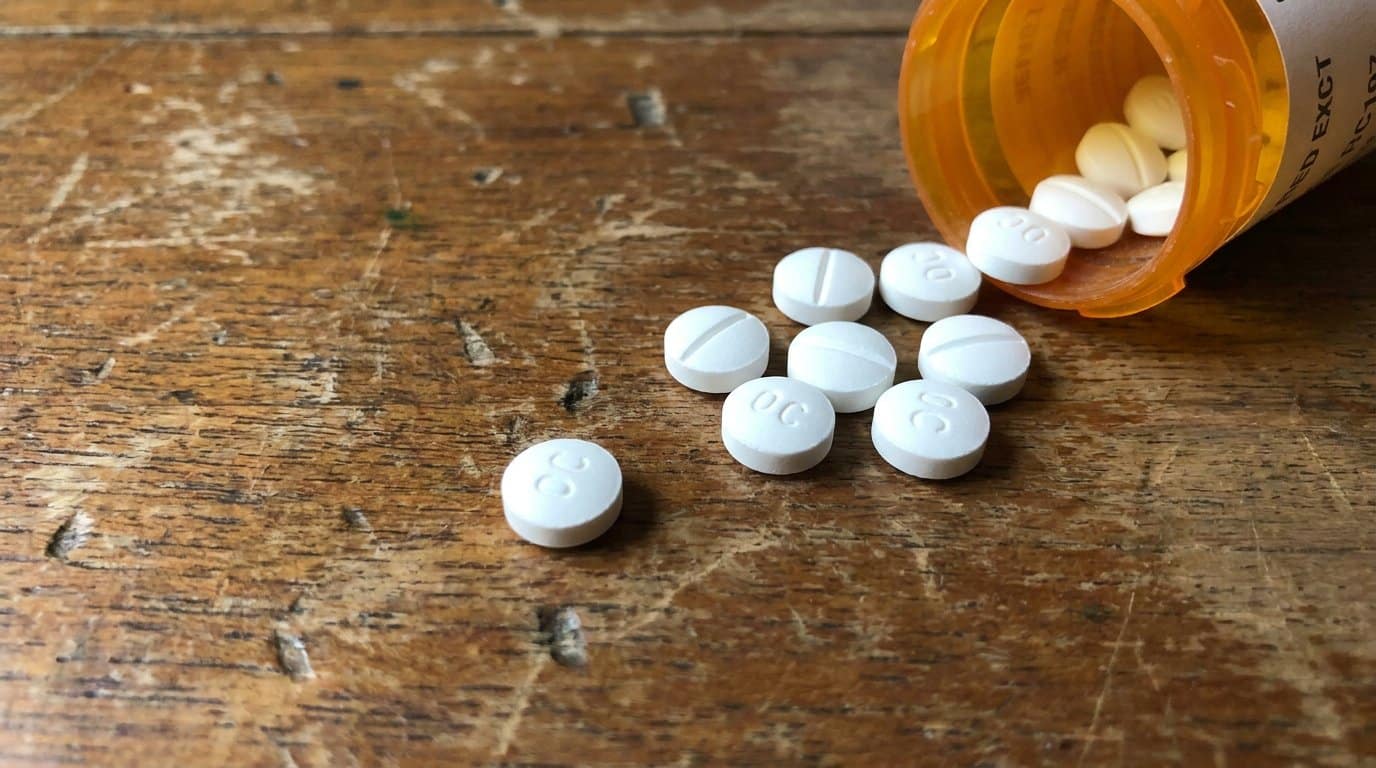
The half-life of oxycodone, typically reported between 3 and 5 hours, represents the time your body needs to eliminate 50% of the drug from your bloodstream. After one oxycodone half life cycle, roughly half remains in circulation. After two cycles, about 25% persists. After three, approximately 12.5%. The duration of oxycodone in urine can vary based on several factors, including the individual’s metabolism and frequency of use.
Understanding the pharmacokinetics oxycodone follows helps clarify how quickly plasma concentrations decline. Half-life describes elimination rate, not how long pain relief lasts or how impaired you’ll feel. Oxycodone metabolism occurs primarily in your liver, where CYP3A4 and CYP2D6 enzymes break the drug into metabolites like noroxycodone and oxymorphone. These compounds are then excreted through urine. Your metabolic rate, liver function, and concurrent medications all influence how rapidly this process unfolds. Based on its half-life, complete elimination of oxycodone from the body takes approximately 20 hours.
Immediate-Release vs. Extended-Release Half-Life
When you take immediate-release oxycodone, your body eliminates it with an apparent half-life of about 3.2 hours, whereas extended-release formulations like OxyContin show a longer apparent half-life of approximately 4.5 to 6.5 hours due to their biphasic absorption pattern. This difference stems from how each formulation delivers the drug: immediate-release tablets release the full dose at once and reach peak plasma levels in about 1 to 1.5 hours, while extended-release tablets use a matrix system that combines an early surface-release phase with slower sustained delivery, reaching peak concentrations around 3 hours. Despite these half-life differences, it’s the controlled absorption rate, not elimination speed alone, that allows extended-release oxycodone to maintain therapeutic plasma levels across a 12-hour dosing interval compared to the 4-to-6-hour window of immediate-release products. Once absorbed, the liver breaks down oxycodone through the cytochrome P450 enzyme system into metabolites like noroxycodone and oxymorphone, which are then excreted primarily through urine.
Immediate-Release Clearance Speed
The clearance speed in the body depends on hepatic metabolism through CYP3A4 and CYP2D6, which convert oxycodone into noroxycodone and oxymorphone. Complete oxycodone elimination of the parent compound generally occurs within about 20 hours, though metabolites can persist longer. Blood detection remains possible for approximately 24 hours, while urine testing extends that window to 3 to 4 days. Hair follicle testing offers a significantly longer surveillance period, with detectability lasting for up to 90 days after the last dose. Your liver function, genetics, and concurrent medications directly influence how rapidly you process each dose.
Extended-Release Absorption Differences
Because extended-release oxycodone relies on a biphasic absorption pattern, it behaves differently from immediate-release formulations at every stage of drug delivery. The initial absorption half-life is approximately 0.6 hours, driven by early surface dissolution, while the prolonged-release phase extends to about 6.9 hours through matrix-controlled diffusion.
This dual-phase design directly shapes the extended release half life profile. You’ll reach peak plasma concentrations around 3 hours rather than the 1 to 1.5 hours typical of conventional formulations. Despite this slower absorption, opioid metabolism liver pathways remain unchanged, the apparent elimination half life of oxycodone in extended-release form is roughly 4.5 hours versus 3.2 hours for immediate-release. The extended-release mechanism modifies absorption kinetics, not fundamental hepatic elimination, which explains why twice-daily dosing maintains therapeutic plasma concentrations.
Comparing Formulation Half-Lives
Immediate-release and extended-release oxycodone share identical metabolic pathways, CYP3A4 and CYP2D6 drive hepatic breakdown into noroxycodone and oxymorphone regardless of formulation, but their apparent elimination half-lives diverge in clinically meaningful ways.
FDA labeling places immediate-release oxycodone’s half-life at approximately 3.2 hours, while OxyContin’s ranges from 4.5 to 6.5 hours depending on the reference. This difference stems from extended-release absorption kinetics, not altered metabolism. Because sustained drug input overlaps with elimination, you’ll observe a longer apparent half-life even though hepatic clearance remains constant.
Both formulations require roughly five half-lives for near-complete clearance, about 16 hours for immediate-release and up to 32 hours for extended-release. This gap directly affects dose timing, steady-state attainment, and post-discontinuation monitoring decisions.
How Your Liver and Kidneys Break Down Oxycodone
Once oxycodone enters your bloodstream, your liver serves as the primary processing center for breaking it down. The enzyme CYP3A4 converts oxycodone into noroxycodone, while CYP2D6 produces oxymorphone. This hepatic metabolism accounts for oxycodone’s relatively short half-life of approximately 3 to 5.5 hours. About 19% of the drug is excreted unchanged through urine, with remaining metabolites cleared via both renal and fecal routes after biliary processing.
Your kidneys handle the final elimination of these metabolites from your bloodstream. If you have impaired renal function, active or toxic metabolites can accumulate, increasing your risk of adverse effects. In such cases, dose reduction and closer monitoring are typically recommended. This dual liver-kidney elimination pathway means your overall clearance rate depends on both organ systems functioning adequately.
How Age, Liver Health, and Genetics Change Oxycodone’s Half-Life

Although oxycodone’s standard half-life falls between 3 and 5.5 hours, your age, liver health, and genetic makeup can shift that window considerably. As you age, hepatic clearance declines, elderly individuals show roughly 15% higher plasma concentrations than younger adults, increasing accumulation risk with repeated dosing.
Compromised liver function directly impairs CYP3A4- and CYP2D6-mediated metabolism, elevating parent-drug levels and extending effective half-life. Extended-release formulations amplify this effect because their prolonged absorption windows overlap with delayed elimination.
Your genetic profile further modulates enzyme activity. CYP2D6 poor metabolizers clear oxycodone more slowly, while ultra-rapid metabolizers shorten exposure time. When multiple factors converge, advanced age plus hepatic impairment plus reduced enzyme activity, drug accumulation accelerates, raising sedation and respiratory depression risk. Individualized dose adjustments and closer monitoring become essential under these overlapping conditions.
How Long Oxycodone Stays in Your Blood and Saliva
Because oxycodone’s half-life ranges from 3 to 5 hours, blood concentrations drop rapidly after dosing, standard blood tests can detect the drug for up to 24 hours, though levels often fall below measurable thresholds within 3 to 6 hours depending on dose size and assay sensitivity.
Saliva offers a slightly wider detection window. Oxycodone appears in oral fluid within 15 to 30 minutes of ingestion and remains detectable for one to four days, outlasting blood positivity after the same dose. This difference reflects how the drug partitions into salivary glands even as plasma clearance progresses. Oxycontin detection in blood tests can vary based on factors such as metabolism and the frequency of use.
Both matrices serve best for confirming recent use. Extended-release formulations and repeated dosing can push detection toward the upper bounds of each range, while individual metabolic variation shifts these timelines in either direction.
How Long Oxycodone Shows Up on a Urine Test

How long oxycodone appears in urine depends largely on the assay cutoff your lab uses and whether it measures the parent drug alone or includes metabolites like noroxycodone, oxymorphone, and noroxymorphone. Most clinical references place the detection window at one to four days, with Mayo Clinic Laboratories citing approximately three days using a 25 ng/mL cutoff. Lower cutoffs extend detectability; SAMHSA-cited research shows cutoffs of 50, 100, and 150 ng/mL each yield detection times exceeding 24 hours.
Several variables shift your individual window. Chronic dosing prolongs urinary excretion compared with single-dose exposure. Higher doses increase total drug load requiring clearance. Hydration status alters urine concentration, and extended-release formulations sustain absorption longer. A negative result doesn’t rule out use if collection falls outside the detection window.
Can a Hair Test Detect Oxycodone After 90 Days?
Hair testing can detect oxycodone for approximately 90 days because standard protocols analyze the first 1.5 inches of hair from the root, corresponding to roughly three months of growth at the average rate of half an inch per month. However, detection can extend beyond this window if longer hair segments are collected, body hair is sampled, or your individual hair growth rate and composition affect drug incorporation and retention. Factors like dose frequency, hair type, and the delay of 5 to 10 days before oxycodone appears in newly grown hair all influence whether your results fall within or outside the standard 90-day detection limit.
Hair Testing Detection Limits
When you’re trying to determine whether a hair test can detect oxycodone beyond the standard 90-day window, the answer depends largely on the length of hair collected and how the laboratory segments the sample. A routine test analyzes only the proximal 1.5-inch segment, representing approximately 90 days of growth. Oxycodone deposited earlier won’t appear unless longer specimens undergo segmental analysis.
- Standard proximal sampling covers only the most recent 90 days, so older exposure falls outside the tested window.
- Detection beyond 90 days requires longer hair and deliberate segmental sectioning to extend the retrospective timeline.
- Hair growth rate determines the time span each segment represents, making sample length the primary variable controlling detection reach.
You shouldn’t rely on standard hair testing to identify oxycodone use older than three months.
Factors Affecting Hair Results
Although a hair test can theoretically detect oxycodone well beyond the standard 90-day window, several biological and analytical factors determine whether it actually will.
Your hair color matters, darker hair binds certain drugs more readily through melanin affinity, potentially increasing detection sensitivity. Conversely, chemical treatments like bleaching, coloring, or relaxing can degrade incorporated drug, reducing measurable concentrations below analytical cutoffs.
Dose and frequency directly influence incorporation levels. Low-level or single-use exposure may produce concentrations too low for reliable detection. Your individual metabolism also plays a role, faster hepatic clearance means less circulating parent drug available for hair incorporation.
Finally, the specific hair segment collected determines the exposure window represented. If you’ve cut or lost hair, the relevant growth segment may no longer be available for analysis.
Beyond The 90-Day Window
Because standard head-hair testing analyzes only the proximal 3.9 cm (approximately 1.5 inches) from the scalp, the detection window it represents covers roughly 90 days of growth, not a fixed biological limit on how long oxycodone persists in hair.
Detection beyond 90 days typically reflects methodological variation, not extended pharmacokinetic retention:
- Longer hair segments analyzed: If a laboratory tests hair beyond 3.9 cm, the window extends proportionally with the additional length collected.
- Body hair substitution: Body hair lacks a reliably defined growth cycle, making its detection window unpredictable and potentially longer than head hair.
- Segmental analysis limitations: Hair growth rates aren’t constant, so assigning precise timeframes to segments beyond the standard window reduces interpretive accuracy.
You shouldn’t interpret a positive result past 90 days as evidence of recent use without confirming the segment length tested.
Why Oxycodone’s Half-Life Doesn’t Equal Pain Relief Time
Many people assume oxycodone’s half-life directly dictates how long pain relief lasts, but these two timelines operate on fundamentally different mechanisms. Half-life measures plasma elimination, the time for blood concentration to drop by 50%, while analgesia reflects receptor engagement in your central nervous system. Immediate-release oxycodone has a plasma half-life of roughly 3 to 5 hours, yet it provides pain relief for approximately 3 to 6 hours.
Your plasma levels can decline well before you notice reduced pain control because opioid receptors don’t release the drug at the same rate your bloodstream clears it. Extended-release formulations illustrate this further: OxyContin’s apparent half-life is about 6.5 hours, but it’s engineered for 12-hour dosing. Formulation design, not elimination kinetics alone, determines your actual duration of relief.
Why Repeated Doses Make Oxycodone Stay Longer
When you take oxycodone on a repeated schedule, each new dose enters your bloodstream before the previous one has fully cleared, causing drug levels to accumulate and reach higher steady-state concentrations than a single dose produces. This overlapping effect is compounded by the persistence of active metabolites like oxymorphone and noroxymorphone, which have longer half-lives than oxycodone itself and continue circulating between doses. Over time, this accumulation means your body requires a longer total elimination window after your last dose, often considerably beyond the 16, 22.5 hours needed to clear a single dose.
Drug Accumulation Over Time
Each time you take another dose of oxycodone before the previous one has fully cleared, the drug accumulates in your bloodstream and reaches higher overall concentrations. With a half-life of approximately 3, 5 hours, oxycodone requires roughly 15, 25 hours to fully eliminate a single dose. Dosing intervals shorter than this window produce measurable buildup. The duration of oxycodone’s effects can be influenced by individual metabolism and overall health.
- Steady-state kinetics: Regular dosing at 10 mg every 4 hours produces steady-state plasma concentrations averaging 34.6 ± 10.3 micrograms/L within approximately 24 hours.
- Metabolite persistence: Liver metabolism generates noroxycodone and oxymorphone, which remain detectable in urine for 1, 3 days after the parent compound declines.
- Formulation impact: Controlled-release products sustain plasma levels across 12-hour windows, amplifying overlap between consecutive doses and extending total body burden beyond immediate-release profiles.
Slower Clearance With Use
With repeated doses, steady-state plasma levels establish within 24 to 36 hours. At that point, your body maintains continuous metabolite production through CYP3A4 and CYP2D6 pathways, keeping noroxycodone and oxymorphone levels elevated. This extends urinary detection to 3, 4 days after your last dose. Factors like reduced hepatic or renal function compound this effect, further delaying both metabolism and excretion. The formulation itself, not just dose frequency, determines how long measurable concentrations persist.
Overlapping Doses Compound Effects
Because oxycodone’s half-life ranges from about 3 to 5 hours, a standard immediate-release dose taken every 4 to 6 hours enters your system before the previous dose has fully cleared. This overlap raises both peak and trough plasma concentrations, producing cumulative pharmacodynamic effects that exceed what any single dose delivers.
- Plasma accumulation: Steady-state levels build within 24 to 36 hours of repeated dosing, meaning residual oxycodone from earlier doses contributes to your total active exposure at every interval.
- Effect stacking: Sedation, respiratory depression, and miosis intensify additively as doses layer, even when you take each dose as prescribed.
- Extended detectability: Repeated dosing prolongs urine detection to 3, 4 days because metabolite clearance lags behind continued drug input.
How Long Until Oxycodone Is Completely Out of Your Body?
How quickly does oxycodone leave your system entirely? With a plasma half-life of 3 to 5 hours, your body eliminates roughly half the drug during each half-life interval. After five half-lives, approximately 97% of the dose has cleared. For immediate-release oxycodone, this translates to roughly 20 hours for near-complete elimination.
However, several variables shift this timeline. Extended-release formulations sustain absorption longer, delaying clearance. Repeated dosing causes accumulation, meaning your body carries a larger drug burden that takes additional time to process. Impaired liver or kidney function slows metabolism and excretion further.
It’s also important to distinguish pharmacological clearance from detectability. Even after oxycodone’s effects have ended and plasma levels are negligible, metabolites like noroxycodone and oxymorphone may persist in urine, saliva, or hair for days to months.
Reach Out Today and Take Back Your Wellness
Oxycodone can stay in your system longer than you expect, and what starts as prescription use can quietly turn into something more. At Vive Treatment Centers in Washington, DC, our experienced team provides trusted Prescription Drug Addiction Treatment with care, compassion, and a personalized approach. Call (202) 506-3490 today and take the first step toward lasting recovery.
Frequently Asked Questions
Does Drinking Water or Staying Hydrated Help Flush Oxycodone Out Faster?
Drinking water doesn’t meaningfully speed up oxycodone elimination. Your liver’s enzymes drive the drug’s metabolism, and your kidneys handle excretion of its metabolites. Staying hydrated supports normal renal function, but it won’t accelerate hepatic processing or shorten oxycodone’s 3-to-5-hour half-life. Higher fluid intake may dilute metabolites in your urine, but dilution isn’t faster clearance. You can’t reliably “flush” oxycodone out, your body eliminates it on its own enzymatic timeline.
Can Oxycodone Interact With Other Medications to Slow Its Elimination?
Yes, certain medications can slow oxycodone’s elimination by inhibiting the liver enzymes that break it down. CYP3A4 inhibitors, like clarithromycin, ketoconazole, and ritonavir, can raise your oxycodone plasma levels considerably. CYP2D6 inhibitors, including paroxetine and fluoxetine, can also reduce metabolism. Even grapefruit juice inhibits CYP3A4 enough to affect clearance. These interactions increase your risk of respiratory depression, excessive sedation, and overdose, so you should always discuss concurrent medications with your prescriber.
Is Oxycodone’s Half-Life Different in Pregnant or Breastfeeding Women?
During pregnancy, your body may clear oxycodone faster, studies show a median maternal half-life of about 2.6 hours during labor, which is shorter than in non-pregnant women. Physiologic changes like increased blood volume and enhanced hepatic metabolism likely drive this acceleration. If you’re breastfeeding, available evidence doesn’t indicate a markedly altered half-life, but small amounts do transfer into breast milk, posing potential risks like respiratory depression and excessive sleepiness in your infant.
Does Body Weight or Body Fat Percentage Affect Oxycodone’s Half-Life?
Your body weight and body fat percentage don’t notably alter oxycodone’s half-life. Unlike highly lipophilic drugs that accumulate in adipose tissue, oxycodone’s elimination depends primarily on hepatic metabolism and renal excretion rather than fat redistribution. Standard pharmacokinetic references consistently cite liver function, kidney function, genetics, and formulation type as the principal variables driving clearance. You’ll find that individual metabolic differences produce more meaningful half-life variation than body composition alone.
Can Exercise or Physical Activity Speed up Oxycodone Metabolism and Clearance?
Exercise doesn’t meaningfully speed up oxycodone’s metabolism or clearance. Your liver’s enzymatic activity, primarily CYP3A4 and CYP2D6 pathways, drives oxycodone’s breakdown, and physical activity doesn’t notably upregulate these processes. While light exercise may modestly support circulation and kidney function, it won’t shorten the drug’s half-life or reliably reduce detection windows. Hydration and movement support your body’s normal elimination processes, but they can’t override the pharmacokinetic factors that govern oxycodone clearance.