



An Intensive Outpatient Program (IOP) at Vive Treatment Centers is structured addiction treatment for adults who need more than weekly therapy but do not need to live at a facility. You attend three-hour sessions, three to five days a week, in daytime or evening tracks, then keep living at home the rest of the time. A psychiatrist leads care, so the treatment covers both the substance use and any depression, anxiety, or trauma underneath it. We accept most major Insurance.
Is IOP the right level of care for you?
IOP is the right level when weekly therapy is not enough but round-the-clock supervision is not necessary. It fits people who can stay sober safely at home overnight, have a stable place to live, and are motivated to attend several sessions a week. People come to IOP three ways: stepping down from inpatient or residential treatment and wanting to keep the structure, stepping up from standard outpatient care that stopped holding, or entering treatment for the first time when the problem is serious but a hospital stay is not warranted. Court-ordered treatment is also commonly completed at the IOP level. If you are not sure IOP is the right fit, a phone assessment sorts it out before you commit to anything.

IOP compared to inpatient and standard outpatient care
The difference between the three main levels of care is how much of your week treatment takes and where you sleep.
Inpatient / Residential | Intensive Outpatient (IOP) | Standard Outpatient (OP) | |
Where you live | At the facility, 21 to 28 days or more | At home | At home |
Time per week | Around the clock | 9 to 15 hours, 3 to 5 days | 1 session |
Work and family | Paused | Continue | Continue |
Best for | Unsafe to stop at home, needs supervision | Serious use, stable home, cannot pause life | Maintaining progress after IOP |
Medication and psychiatry | On-site | Psychiatrist-led, integrated | As needed |
Most people do not need residential care, and for those who do, IOP is usually the next step down once they are stable. IOP gives you the clinical intensity of a structured program while you practice recovery in the same daily life you will keep after treatment ends, which is where it has to hold.
What a week in IOP looks like
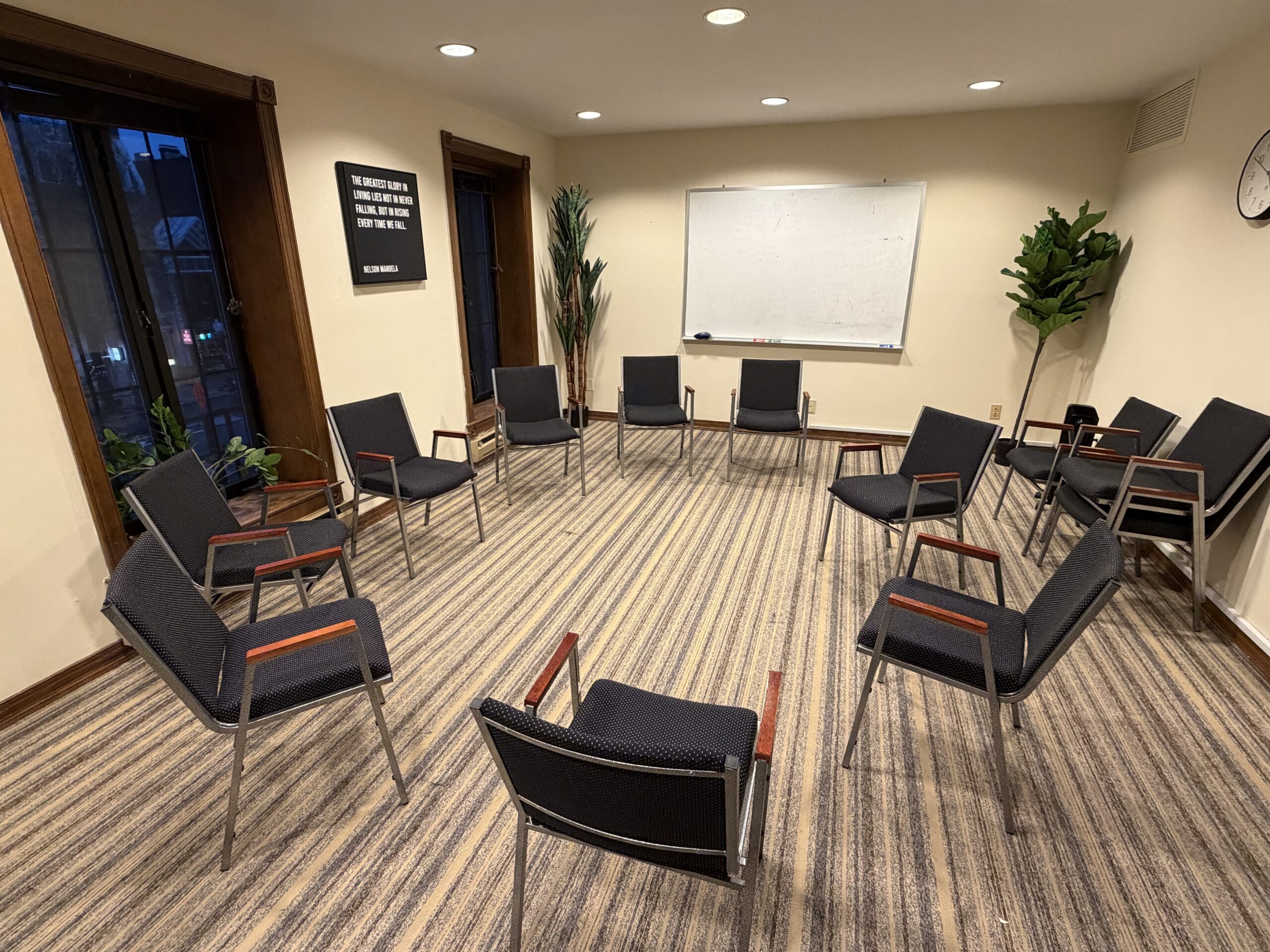
A week in IOP is built from group therapy, individual counseling, and psychiatric care, scheduled around your job or classes. Sessions run three hours and meet three to five days a week depending on what your recovery needs. Group therapy is the core, where you work through recovery alongside others doing the same; individual counseling gives you one-on-one time with a therapist; and family therapy brings the people you live with into the process. Treatment draws on Cognitive Behavioral Therapy, Dialectical Behavior Therapy, and Motivational Interviewing, and a psychiatrist manages any medication as part of the same plan. Daytime and evening tracks exist so treatment fits a working schedule rather than replacing it.
Treatment that fits a working life
Evening sessions are the reason most working professionals can do IOP at all. You can attend treatment after work, keep your job and your income, and avoid explaining a month-long absence to an employer. The same flexibility works for students and for parents managing a household. This matters clinically, not just logistically: recovery you build while living your actual life, handling real stress and real triggers with a clinical team behind you, tends to hold better than recovery built inside a facility you then leave. Staying in your environment with support is the point of outpatient care, not a compromise on it.

Psychiatrist-led care and dual diagnosis
Vive is the only addiction center in the area founded and operated by a board-certified addiction psychiatrist, and that shapes how IOP works here. Depression, anxiety, PTSD, bipolar disorder, and schizophrenia are treated in the same program as the substance use, not referred out. A psychiatrist evaluates you, prescribes and manages medication, and adjusts the plan as you go. When substance use is tangled up with an untreated mental health condition, treating only the addiction leaves half the problem in place, which is a common reason treatment elsewhere does not last. A licensed psychiatrist, addiction counselor, and therapist work together on your care.
Substances we treat in IOP
Our IOP treats addiction to alcohol, opioids, heroin, fentanyl, cocaine, methamphetamine, marijuana, and prescription drugs. Many people arrive using more than one, and co-occurring mental health conditions are treated alongside whatever the substance is. Each substance links to a page on how we treat it, and if you are not sure whether what you are using fits outpatient care, a phone call sorts it out.
Call Now To Reach Our Confidential Support Services
Take the next step toward personalized, confidential support designed to help you move forward.

Starting IOP, step by step
Getting started takes four steps. First, a confidential phone call with our team about what is going on and what you need. Second, we verify your insurance and walk you through coverage before anything begins. Third, an intake assessment with a licensed clinician who builds your treatment plan. Fourth, you begin treatment, and as you progress you step down toward weekly outpatient care with continued relapse support and alumni community. If our program is not the right fit, we help connect you to one that is.
Insurance and cost
We are in-network with Aetna, Cigna, CareFirst BlueCross BlueShield including the Federal Employee Program, UnitedHealthcare and Optum, and Tricare, and we work with most other commercial plans. Most plans cover IOP with prior authorization; your out-of-pocket depends on your deductible and coinsurance. Send the verification form and our team confirms your benefits before your first session, so the cost is clear up front.
Frequently Asked Questions
What is an intensive outpatient program?
IOP is structured addiction treatment of about three hours a session, three to five days a week, while you live at home. It offers more support than weekly therapy without the round-the-clock supervision of residential care.
How is IOP different from inpatient rehab?
Inpatient means living at a facility for weeks; IOP means attending sessions several days a week while staying home, working, and keeping your routine. Many people step down from inpatient into IOP.
Can I keep working or going to school during IOP?
Yes. Daytime and evening tracks exist specifically so you can attend treatment around a job or classes. Most people keep both.
How long does IOP last?
The intensive phase commonly runs about three months, then steps down to weekly outpatient care. Length follows your clinical progress, not a fixed number of weeks.
Do I need detox before IOP?
If you are physically dependent on alcohol, benzodiazepines, or opioids, possibly yes. We assess that on your first call and arrange supervised detox at a partner facility before you start if it is needed.
Does insurance cover IOP?
Most commercial plans cover it with prior authorization. We are in-network with Aetna, Cigna, CareFirst, UnitedHealthcare, and Tricare, and verify your benefits before you begin.
Does IOP treat mental health conditions too?
Yes. A psychiatrist leads care, and depression, anxiety, PTSD, bipolar disorder, and schizophrenia are treated in the same plan as the substance use.