



Prescription drug addiction treatment at Vive Treatment Centers is outpatient care for dependence on stimulants like Adderall, prescription painkillers, and prescription sedatives. It combines therapy, psychiatric care, and medication management when appropriate, on a schedule you attend around work or school. Prescription drug dependence often starts with a legitimate prescription, which is part of why it is easy to miss and hard to admit. A psychiatrist leads care and treats the anxiety, depression, or focus problems underneath the use. We accept all major Insurance.
The prescription drugs we treat
Prescription medications become addictive along three different paths, and treatment differs for each.
- Prescription stimulants (Adderall, Vyvanse, Ritalin). Often misused for focus, academic pressure, or staying awake, until the dose creeps up and stopping feels impossible. There is no medication that treats stimulant addiction, so care is behavioral and psychiatric.
- Prescription painkillers (oxycodone, hydrocodone, and other opioids). These are opioids, so treatment can include medication like buprenorphine that controls cravings and withdrawal, alongside therapy.
- Prescription sedatives. Dependence on sedatives builds quietly, and withdrawal can be medically dangerous, so we assess this carefully on the first call and arrange supervised detox if it is needed before outpatient care.
If you are not sure which category your medication falls into, or you are using more than one, call and we will sort it out.

When a prescription becomes a problem
The line between taking a medication and depending on it is easy to miss because it started with a doctor. Common signs are taking more than prescribed, running out early, needing it to function normally, feeling anxious about the next refill, or using it for something other than what it was prescribed for. With stimulants specifically, it often looks like relying on Adderall to work, study, or perform, then finding you cannot do those things without it. You do not need to have hit a crisis for treatment to be worth a call. Earlier is easier, and the assessment costs nothing.
How we treat Adderall and stimulant dependence
Stimulant addiction has no FDA-approved medication, so treatment is built on behavioral therapy and psychiatric care rather than a prescription. Cognitive Behavioral Therapy targets the thoughts and situations that drive use; Dialectical Behavior Therapy builds skills for the stress and pressure that often sit underneath it. Because so many people use stimulants to manage undiagnosed anxiety, depression, or genuine attention problems, a psychiatrist evaluates what is actually going on and treats it directly, which is often what finally makes stopping possible. Treating the reason for the use, not just the use, is the difference between quitting and staying quit.
Stimulant use in high-pressure work and school
Adderall dependence often looks like productivity before it looks like a problem. People start using it to get through exams, hit deadlines, or keep up in demanding jobs, and because it works at first, the use gets reinforced as a tool rather than a risk. Over time the dose stops being optional, focus without it feels impossible, and the crash between doses drives more use. If your work or studies now depend on a stimulant you cannot stop, that is the pattern treatment is built to interrupt, and it does not mean giving up your performance. A psychiatrist can assess whether a real attention problem is underneath the use and treat it properly, so you are not left choosing between the medication and functioning.

How treatment works here
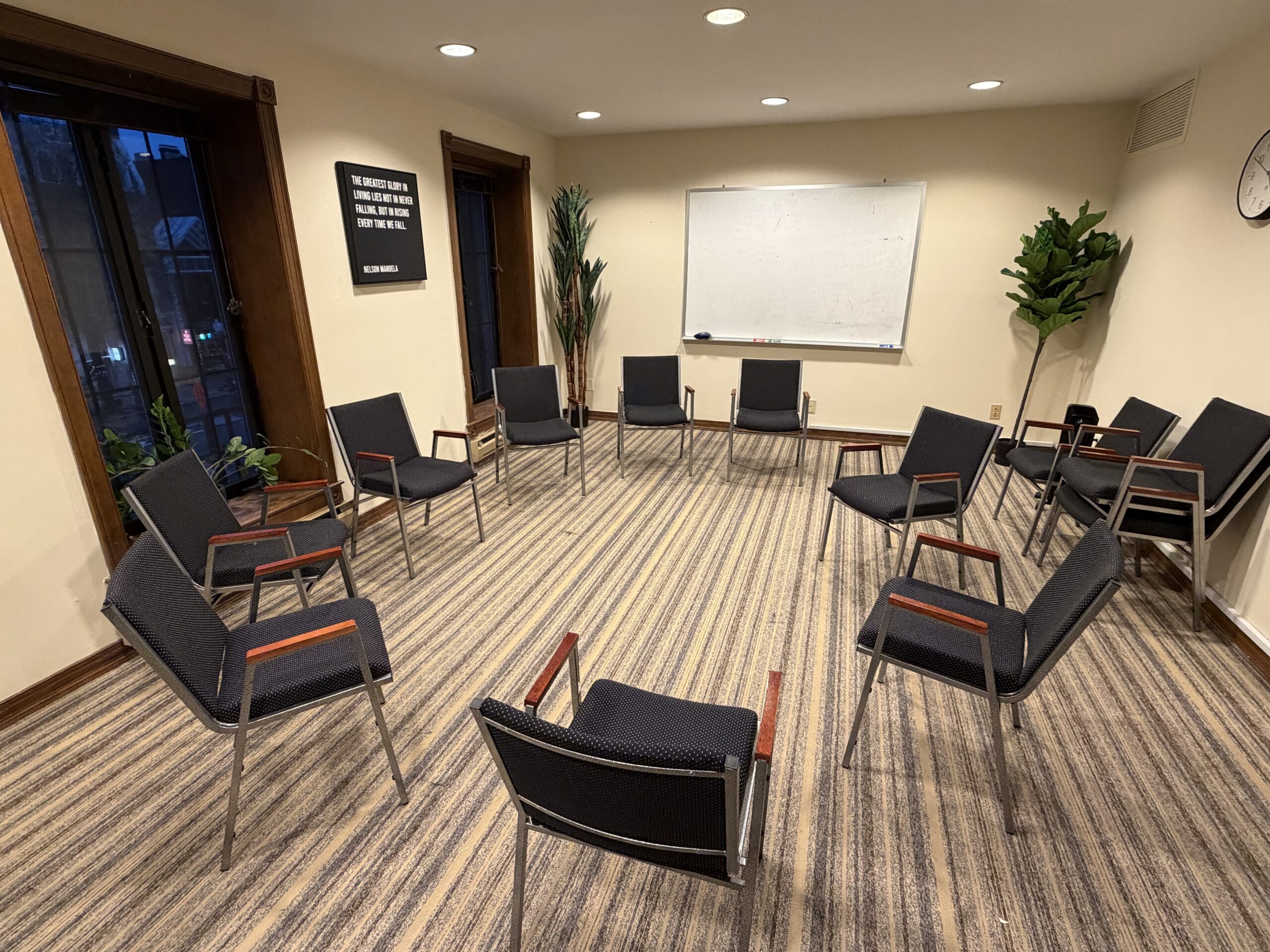
Treatment runs through our Intensive Outpatient Program, with three-hour sessions three to five days a week in daytime or evening tracks, then steps down to weekly care. Group therapy, individual counseling, and family sessions carry the clinical work, and a psychiatrist manages any medication in the same plan. You live at home throughout, keeping your job or studies, which matters because prescription drug use is usually tangled up with work and academic demands you cannot simply step away from. The intensive phase commonly runs about three months, then steps down to weekly outpatient sessions, with relapse management and an alumni community that stays available after formal treatment ends. Because prescription drug use is often tied to ongoing prescriptions and prescribers, part of the work is building a plan for how you handle medications and refills going forward, so you are not sent back into the same situation that started it.
Call Now for Prescription Drug Addiction Treatment
Contact us today to discuss your options and learn what level of care is the right fit. We’re here to help you take the next step with clarity, support, and a plan that works.

Treating the pressure underneath the use
Prescription drug misuse rarely stands alone. Stimulant use often traces back to anxiety, burnout, perfectionism, or an attention problem; painkiller use to pain that is physical, emotional, or both. Vive was founded by a board-certified addiction psychiatrist for exactly this reason, so depression, anxiety, PTSD, and attention concerns are treated in the same plan as the substance use, not referred out. When the underlying pressure goes untreated, the pull toward the medication stays. Treating both together is what makes recovery hold.
Insurance and cost
We are in-network with Aetna, Cigna, CareFirst BlueCross BlueShield including the Federal Employee Program, UnitedHealthcare and Optum, and Tricare, and we work with most other commercial plans. Most cover outpatient treatment with prior authorization; your out-of-pocket depends on your deductible and coinsurance. Send the verification form and our team confirms your benefits before your first visit, so cost is clear before treatment starts.
Frequently Asked Questions
Can Adderall addiction be treated outpatient?
Yes. Outpatient care works well for stimulant addiction when you have a stable living situation and need structured support while continuing work or school. Most people keep both throughout treatment.
What treats stimulant addiction if there is no medication for it?
Behavioral therapy and psychiatric care. CBT and DBT address the patterns and pressures behind use, and a psychiatrist treats any underlying anxiety, depression, or attention problem driving it.
Is prescription painkiller addiction treated differently?
Yes. Painkillers are opioids, so treatment can include medication like buprenorphine to control cravings and withdrawal, alongside the same therapy and psychiatric care.
How do I know if my prescription use is a problem?
Signs include taking more than prescribed, running out early, needing it to function, or using it for something other than its purpose. A confidential assessment gives you a clear answer at no cost.
Do I need to stop before I call?
No. Call first. For some prescription drugs, stopping suddenly is unsafe, so we assess that and arrange supervised detox if needed before treatment begins.
Does insurance cover treatment?
Most commercial plans cover outpatient prescription drug treatment with prior authorization. We are in-network with Aetna, Cigna, CareFirst, UnitedHealthcare, and Tricare, and verify your benefits before you start.
Do you treat mental health conditions too?
Yes. A psychiatrist leads care, and anxiety, depression, PTSD, and attention concerns are treated in the same plan as the substance use.