







Smoking weed causes your throat sore because cannabis smoke delivers hot combustion byproducts, tar, aldehydes, and particulate matter directly to your mucosal lining. THC simultaneously suppresses salivary gland secretion, stripping your airway of its natural protective barrier. Repeated coughing then compounds the inflammation through mechanical strain. You can relieve symptoms with saltwater gargles, honey-based teas, anesthetic lozenges, or humidification. Understanding exactly how each mechanism damages your throat will help you make more targeted decisions about prevention and treatment. knowing how to heal throat after smoking too much can greatly enhance your recovery process. It’s essential to stay hydrated and avoid further irritants, as this will promote healing. Incorporating soothing remedies like herbal teas and steam inhalation may also provide relief and support your throat’s restoration.
Why Does Smoking Weed Make Your Throat Sore?

When you smoke weed, several interconnected mechanisms converge to irritate your throat. Cannabis smokers typically take larger puffs than tobacco smokers, overwhelming throat tissues with increased smoke volume and triggering compounding coughing fits. The irritants, particles, and chemicals in cannabis smoke, including tar, carbon monoxide, and combustion by-products, are particularly aggressive; smoke particles measure approximately 29% larger than tobacco particles, intensifying airway inflammation. THC simultaneously inhibits saliva production, inducing dry mouth that strips your throat of its natural protective moisture. This desiccation amplifies the abrasive effect of inhaled irritants, leaving tissue vulnerable to persistent soreness. Your immune system compounds this response by identifying smoke as a foreign invader, triggering inflammatory reactions that produce the characteristic burning and scratchy sensations you experience post-inhalation. With repeated exposure, the nerve endings in throat can become increasingly sensitized, causing even minor irritants to produce more pronounced discomfort over time.
How Hot Smoke Damages Your Throat When You Inhale
Among the multiple irritants examined above, heat itself stands as one of the most immediate and physically damaging factors when you inhale cannabis smoke. Heat irritation to throat tissues begins the moment hot air contacts delicate mucosal linings, drying them out and triggering inflammation. Frequent sessions compound this damage, progressively sensitizing your throat to further injury.
| Factor | Mechanism | Outcome |
|---|---|---|
| Hot smoke exposure | Dries mucosal lining | Inflammation and soreness |
| Deep inhalation | Prolongs heat contact | Increased tissue damage |
| Frequent sessions | Sensitizes throat tissues | Chronic irritation |
Holding smoke intensifies heat contact, worsening rawness and scratchiness. Water-cooled devices like bongs reduce thermal intensity, offering measurable relief. Minimizing inhalation depth and session frequency directly limits cumulative heat-driven throat damage. Beyond throat discomfort, repeated exposure to hot smoke can contribute to respiratory problems that extend well past the throat itself.
How THC Dries Out Your Throat and Makes Pain Worse
When you smoke weed, THC binds to CB1 and CB2 receptors in your salivary glands, directly suppressing saliva production through a mechanism that mimics the endocannabinoid anandamide. This reduction in salivary flow, a condition clinically termed xerostomia, strips your throat of its natural lubrication, leaving tissue more vulnerable to irritation and pain. Research confirms that dry mouth effects can persist one to six hours post-use, meaning your throat remains inadequately protected long after you’ve finished smoking. Notably, saliva prevents tooth decay, stops harmful bacterial growth, and aids in the repair of both hard and soft tissues, meaning its suppression carries consequences well beyond simple throat discomfort.
THC Reduces Saliva Production
One of the primary reasons smoking weed worsens throat soreness is that THC greatly reduces saliva production, leaving your throat dry, irritated, and more vulnerable to pain. THC activates CB1 and CB2 receptors in your submandibular glands, suppressing salivary secretion through multiple pathways. This directly causes dry throat after smoking.
| Mechanism | Target | Effect |
|---|---|---|
| CB1/CB2 Activation | Submandibular glands | Suppresses salivary secretion |
| Na/K ATPase Inhibition | Ion transport | Reduces fluid movement |
| cAMP Suppression | Acinar cells | Limits calcium mobilization |
THC also inhibits adenylate cyclase, reducing cAMP-mediated protein kinase A activity. Lower cAMP levels decrease both fluid and protein secretion. Without adequate saliva, your throat loses its natural protective coating, intensifying irritation and prolonging soreness after each session.
Dry Throat Intensifies Discomfort
Dry throat from smoking weed doesn’t just feel uncomfortable, it actively amplifies every source of pain already present in your throat. When THC reduces saliva production, dryness heightens discomfort by stripping away the protective lubrication your tissues depend on. Saliva lubrication reduces pain by minimizing friction between throat surfaces, and without it, even minor throat irritation from smoking becomes tremendously more pronounced. Heat from inhaled smoke compounds this effect by physically drying mucous membranes within minutes of consumption. Your throat’s vulnerability increases as moisture levels drop, making each swallow more painful. Vaping produces comparable dryness, while edibles largely avoid this mechanism entirely. Novice users typically experience more intense xerostomia symptoms than seasoned smokers, who develop measurable tolerance to THC-induced dryness over repeated exposure.
What’s Actually in Cannabis Smoke That Burns Your Throat
Cannabis smoke contains several distinct chemical classes that directly irritate throat tissue through different physiological mechanisms. Aldehydes including acrolein, methacrolein, formaldehyde, and acetaldehyde form through thermal degradation of terpenes, plant sugars, and vape additives. These compounds activate TRPV1 and TRPA1 receptor channels, triggering pain and cough responses. Volatile organic compounds emerge from overheated resins and oxidized flavonoids, contributing additional oxidative stress to airway tissue. Particulate matter, particularly PM2.5, bypasses upper airway defenses and reaches deep respiratory structures. Ammonia from poorly cured cannabis and fertilizer residues create sharp acrid irritation upon inhalation. Terpene thermal byproducts like phenols further intensify harshness. Together, these compounds create a compounding chemical environment that you inhale with every draw, making throat irritation a predictable physiological outcome rather than coincidence.
How Your Smoking Technique Makes Throat Soreness Worse
Though many users attribute throat soreness solely to cannabis itself, your smoking technique plays an equally significant role in determining irritation severity. Deep inhales expose your throat to extreme heat, while rapid inhalation prevents mucosal membranes from adjusting, intensifying burning sensations. Smoke holding duration compounds the problem, retaining smoke beyond one second prolongs irritant contact without improving absorption. High combustion temperatures, reaching 800, 900°C, generate tar and harmful particles that directly inflame bronchial tissues. Improper puff volume, particularly large bong rips, overwhelms your throat with concentrated, dry smoke. Moderating inhalation depth can reduce discomfort by nearly 20%, while slower, controlled puffs minimize heat exposure. Adjusting these technical behaviors meaningfully decreases irritation without necessarily requiring you to change your consumption method entirely.
Why Coughing Makes Your Throat Even More Sore
When you cough after smoking, your throat enters a self-reinforcing irritation cycle that amplifies soreness beyond the initial irritant exposure. Each cough exposes your already-inflamed weed throat tissues to repeated friction, deepening soreness rather than resolving it. how long will my throat be sore after smoking can vary based on several factors, including the frequency of use and individual sensitivity. Typically, discomfort may last from a few hours to several days, depending on how much irritation has occurred. Staying hydrated and using soothing remedies can help alleviate the soreness more quickly.
Contributing mechanisms include:
- Muscle strain: Repeated coughing strains throat muscles comparably to prolonged yelling, producing hoarseness and swollen cervical lymph nodes.
- Compounding inflammation: Forceful coughing aggravates tissues already sensitized by smoking weed sore throat irritation, intensifying swallowing and speaking discomfort.
- Persistent triggering: Dry air or mouth breathing during coughing episodes exacerbates the scratchy sensation, sustaining the cycle without resolution.
Chest tightness frequently accompanies prolonged coughing bouts, and chronic cough exceeding three weeks drastically elevates muscle strain severity, converting temporary discomfort into sustained throat compromise.
How to Soothe a Sore Throat After Smoking Weed
Breaking the irritation cycle that coughing perpetuates requires targeted interventions that address both inflammation and mucosal dryness simultaneously. If you’re wondering why does my throat hurt when i smoke weed, the following evidence-based remedies provide structured relief.
| Remedy Category | Method | Mechanism |
|---|---|---|
| Hydration | Honey water, herbal teas | Coats mucosa, reduces inflammation |
| Gargling | Saltwater solution | Clears irritants, reduces swelling |
| Steam/Humidification | Hot shower, humidifier | Hydrates epithelial cells |
| Lozenges/Sprays | Chloraseptic, anesthetic lozenges | Numbs tissue, stimulates saliva |
| Herbal Aids | Slippery elm, marshmallow root | Forms protective mucosal coating |
You should prioritize consistent hydration throughout sessions. Rest your voice, take session breaks, and apply steam therapy to accelerate mucosal recovery and reduce persistent soreness.
Consumption Methods That Are Easier on Your Throat
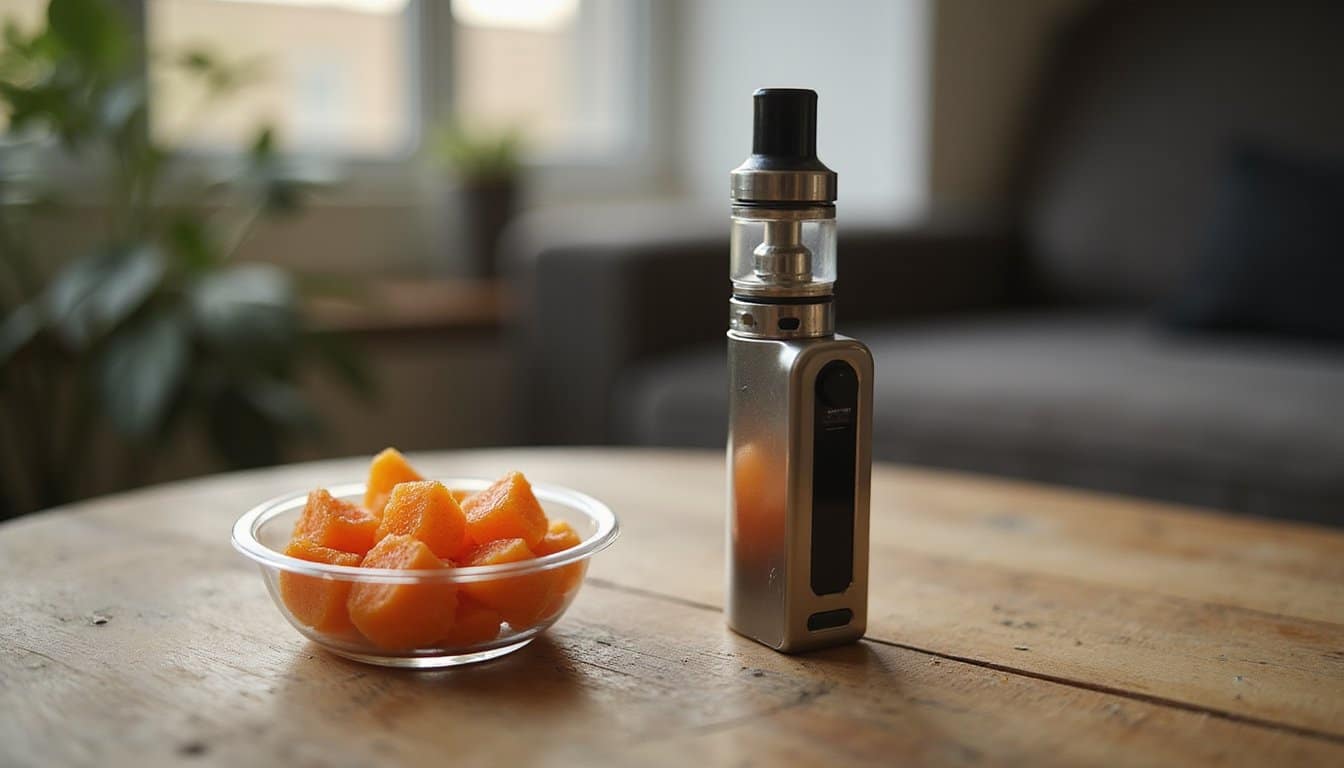
If you’re looking to reduce throat irritation, switching your consumption method can make a measurable difference. Vaporizers heat cannabis at lower temperatures, cutting throat soreness by up to 30% compared to traditional smoking, while edibles eliminate smoke exposure entirely by bypassing your respiratory tract. Your choice between pipes and rolling papers also matters, as filtered devices and natural wraps like King Palm reduce chemical irritants and are linked to 35% less throat discomfort than unfiltered options.
Vaporizers Reduce Throat Irritation
Switching to a vaporizer is one of the most effective ways to reduce throat irritation associated with cannabis consumption. Unlike combustion, vaporizers heat cannabis into steam, bypassing hot tar, toxins, and combustion byproducts. Studies confirm vaporizing reduces throat irritation by up to 30%, while temperature-controlled vaporizers decrease irritation by nearly 25%.
Key clinical benefits you’ll experience include:
- Cleaner inhalation: Vaporizer use reduces respiratory symptoms, including chronic coughing and carbon monoxide exposure.
- Cooler vapor: Lower temperature settings produce thinner, smoother vapor, considerably reducing airway stress.
- Reduced particle exposure: Cannabis smoke particles are 29% larger than tobacco particles; vapor eliminates this disparity entirely.
If throat soreness disrupts your daily comfort, switching to a well-maintained, temperature-controlled vaporizer offers measurable, evidence-supported relief.
Edibles Eliminate Smoke Entirely
While vaporizers meaningfully reduce throat irritation, edibles eliminate respiratory exposure entirely by bypassing your lungs through digestion. When you consume edibles, you eliminate respiratory risks associated with combustion byproducts, carcinogens, and throat irritants that smoking produces. There’s no smoke inhalation, no bronchi irritation, and no phlegm production.
However, edibles introduce distinct pharmacokinetic differences you must understand. Onset takes 60 minutes to 2 hours, and effects last 4, 8 hours due to 11-hydroxy-THC metabolism. Fixed dosing, typically 5mg THC per gummy, provides measurable consumption control, though delayed onset frequently causes accidental overconsumption. However, edibles introduce distinct pharmacokinetic differences you must understand, which often leads to comparisons with the duration of shroom trip effects when evaluating how long altered states persist. Onset takes 60 minutes to 2 hours, and effects last 4, 8 hours due to 11-hydroxy-THC metabolism. Fixed dosing, typically 5 mg THC per gummy, provides measurable consumption control, though delayed onset frequently causes accidental overconsumption.
If you’re managing throat irritation, starting with low doses and tracking intake via product labels reduces variability. Note that some edibles contain allergens or added sugars that may present separate health considerations.
Pipes Versus Rolling Papers
Choosing between pipes and rolling papers meaningfully affects throat irritation outcomes, and the differences stem from measurable combustion dynamics. Rolling papers combust plant material fully, generating hotter smoke, more tar, and higher carbon monoxide exposure. Paper additives like bleach introduce additional chemical irritants directly into your airways. Glass pipes preserve terpenes, deliver cooler, smaller puffs, and reduce acute pharyngitis risk comparatively.
Consider what research reveals:
- Joints lose 60% of THC to sidestream smoke, forcing you to inhale more puffs unnecessarily
- Rolling papers correlate with higher laryngopharyngitis rates from prolonged hot smoke exposure
- Pipes enable lower-frequency use, directly reducing cumulative respiratory symptom burden
Switching to pipes doesn’t eliminate risk entirely, but the combustion mechanics measurably reduce throat irritation compared to joints.
Compassionate Care Is Just One Call Away
Frequently Asked Questions
Can Smoking Weed Worsen an Existing Throat Infection or Illness?
Yes, smoking weed can vastly worsen an existing throat infection. The heat from cannabis smoke causes thermal injury to already-inflamed tissues, while chemical irritants like tar amplify mucosal damage. You’re also suppressing your immune response, marijuana smoke paralyzes protective cilia, allowing bacteria to accumulate and prolong your infection. It’ll also dry your mucous membranes, increasing inflammation. If you’ve got an active throat illness, continuing to smoke tremendously delays your recovery.
Does Secondhand Cannabis Smoke Also Cause Throat Soreness in Others?
Yes, secondhand cannabis smoke can cause throat soreness in those around you. When you’re exposed to it, you’re inhaling fine particulate matter, toxic substances like ammonia and hydrogen cyanide, and irritating compounds that directly inflame airway tissues. Bong smoke generates four times greater PM2.5 concentrations than cigarette smoke, intensifying this risk. If you’re in an unventilated space, your exposure increases substantially, worsening throat irritation, coughing, and respiratory inflammation.
How Long Does a Sore Throat From Smoking Weed Typically Last?
Your sore throat from smoking weed typically resolves within 24 hours if you rest and stay hydrated. However, you’ll likely experience discomfort for a few days depending on how frequently you smoke. If you continue smoking, you’re delaying recovery due to ongoing inflammation. Persistent soreness beyond one week warrants medical consultation, as it may indicate chronic tissue damage. Drinking 3, 4 liters of water daily and using saltwater gargles can accelerate your recovery substantially.
Can Underlying Acid Reflux Make Weed-Related Throat Soreness Significantly Worse?
Yes, underlying acid reflux can dramatically worsen your weed-related throat soreness. THC directly reduces lower esophageal sphincter (LES) pressure and increases transient LES relaxations, allowing stomach acid to repeatedly backflow into your esophagus. When you add smoke irritation to already inflamed esophageal tissue, you create a compounding effect that intensifies discomfort. Cannabis also delays gastric emptying, prolonging acid exposure. If you have chronic reflux, switching to edibles or tinctures can eliminate this synergistic irritation.
Does Smoking Weed Outdoors Versus Indoors Affect Throat Irritation Levels?
Yes, smoking weed outdoors reduces your throat irritation compared to indoors. When you smoke outside, open air disperses smoke particles and dilutes irritant concentrations, lowering your exposure to combustion by-products. Indoors, poor ventilation traps fine particulate matter, concentrates heat and chemicals, and increases your inflammation risk. Research confirms smoked cannabis already produces significant irritation (27.8 rating at 10mg THC), so indoor environments amplify this effect considerably. Choosing outdoor settings meaningfully reduces your cumulative irritant exposure.