






White kratom products come in three distinct formats: powder, capsules, and stem and vein. Powder delivers the highest alkaloid concentration at the lowest cost but requires manual measuring. Capsules encapsulate the same material with pre-measured convenience at a premium price. Stem and vein presents a lower primary alkaloid concentration, a coarser texture, and extends absorption by up to 50%. Each format serves different usage priorities, and there’s more to unpack about which one fits your needs. When considering white kratom vs green kratom vs red kratom, it’s essential to understand their unique properties and effects. Green kratom tends to offer a balanced experience that promotes energy and focus, while red kratom is often chosen for its relaxing and pain-relieving qualities. Assessing your individual needs and preferences can guide you to the best option for your situation.
What Is White Kratom and How Does It Differ From Other Strains
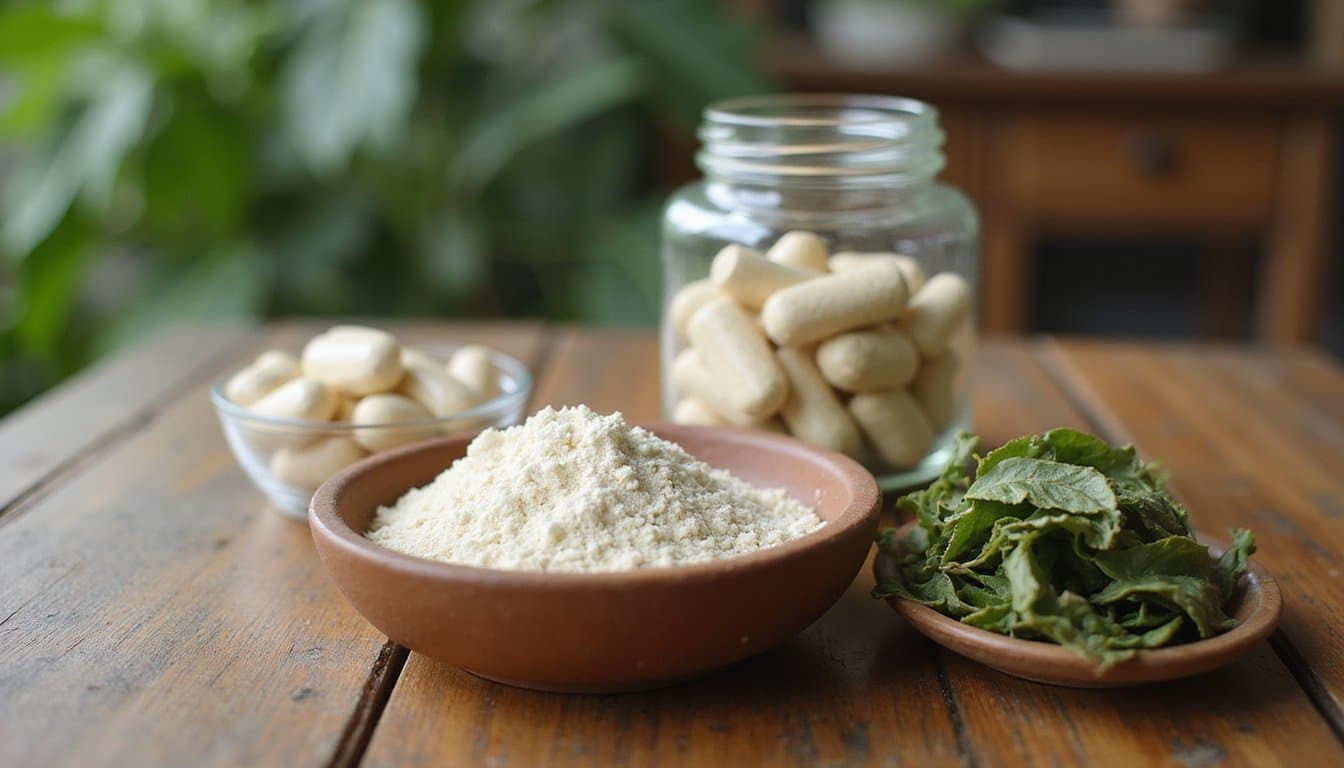
The resulting alkaloid composition features higher mitragynine and lower 7-hydroxymitragynine than red varieties, producing stimulating, focus-oriented effects rather than sedation or analgesia. You’ll find this profile consistent across white kratom powder, white kratom capsules, and white vein kratom capsules, regardless of format. Green strains occupy a middle ground, while white strains deliver the most pronounced energizing response among the three primary vein classifications. White kratom undergoes a careful indoor drying process to maintain the consistency of its alkaloid profile and light green hue.
White Kratom Powder vs. Capsules vs. Stem and Vein: Key Differences
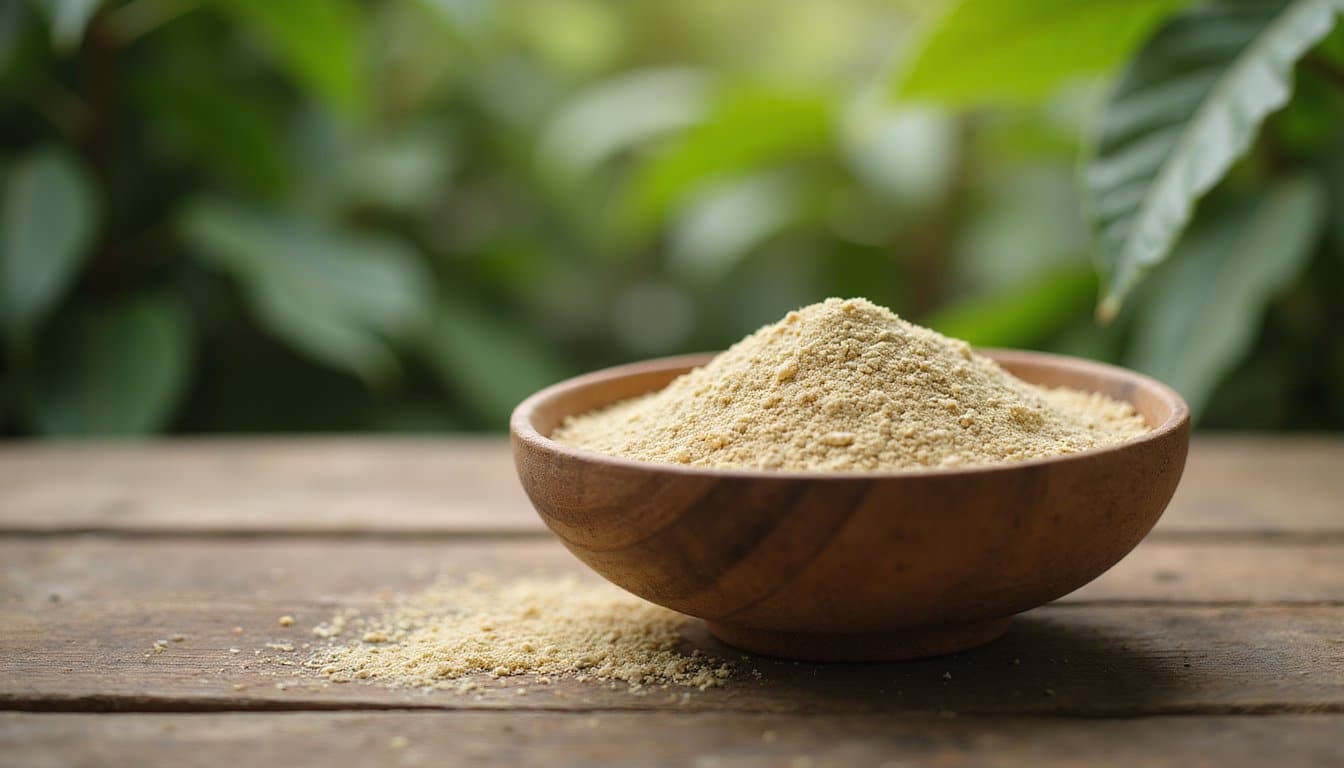
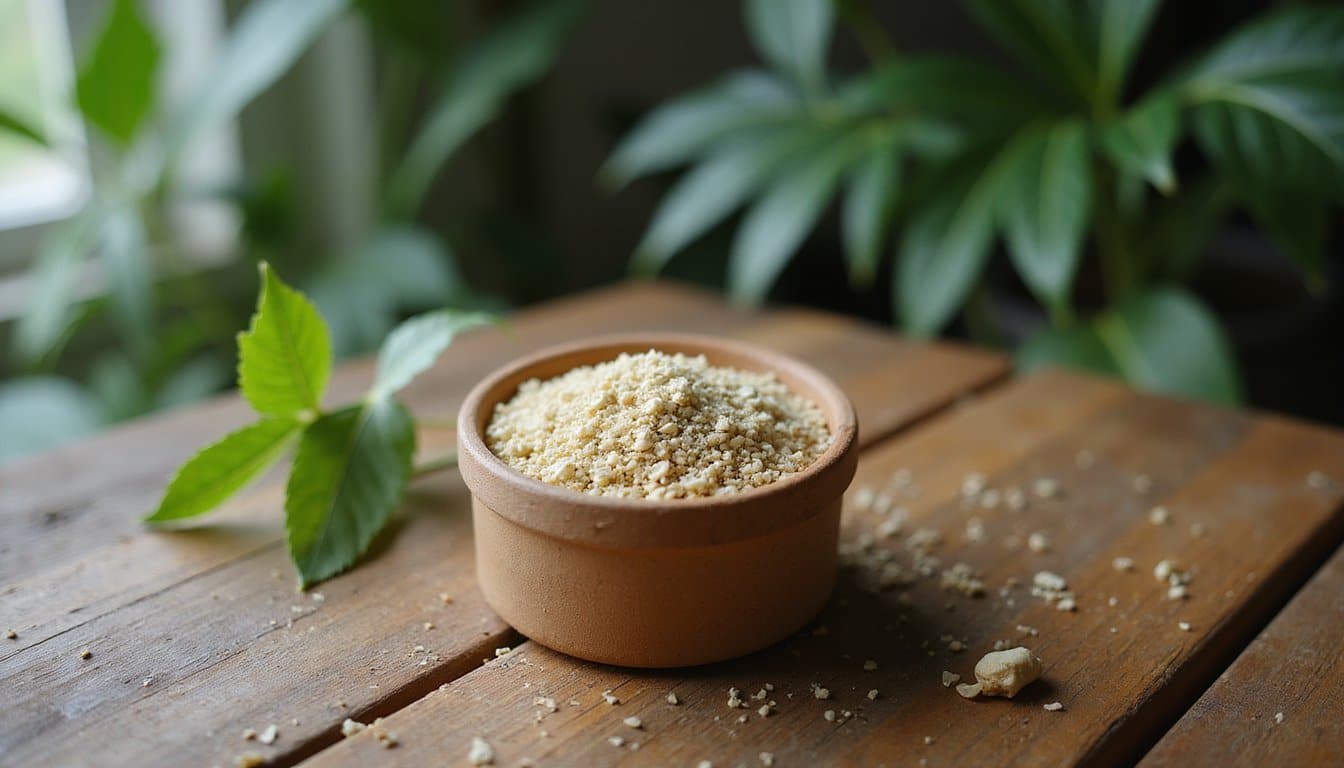
Three distinct product formats define the white kratom market: powder, capsules, and stem and vein. White kratom powder delivers concentrated leaf alkaloids, offering the most cost-effective option per gram. Kratom capsules white vein format provides pre-measured convenience at a premium price. Stem and vein capsules contain lower overall alkaloid concentrations but present a distinct alkaloid profile absent from standard leaf material. When considering white kratom dosage for energy, users often start with a lower amount to assess their individual tolerance and response. Gradually increasing the dosage can help optimize the energizing effects while minimizing potential side effects. It’s essential to remember that personal body chemistry can significantly influence the outcome, making careful dosage adjustment crucial.
| Format | Key Characteristic |
|---|---|
| White Kratom Powder | Highest alkaloid concentration per gram |
| Kratom Capsules (White Vein) | Pre-measured; consistent dosing |
| Stem and Vein | Distinct alkaloid profile; lower potency |
| Cost | Powder < Stem & Vein < Capsules |
| Preparation | Powder requires mixing; capsules do not |
You’ll select your format based on dosing precision, budget, and desired alkaloid experience. White vein kratom originates from young kratom leaves, which accounts for its characteristically uplifting and motivating effects compared to other vein colors.
What’s Actually in White Kratom Powder and Why the Alkaloids Matter
White kratom powder derives its effects from over 50 chemical constituents, but alkaloids drive the core pharmacological action. When you examine white leaf kratom, mitragynine dominates at up to 66% of total alkaloid content, primarily delivering energizing and focus-enhancing effects. 7-Hydroxymitragynine, though minor at roughly 2%, functions as the most potent alkaloid present. Speciogynine contributes approximately 7%, supporting muscle tension relief, while paynantheine reaches up to 8%, promoting soothing properties.
Total alkaloid concentration in dried leaves ranges between 0.5% and 1.5%, varying by plant age, environment, and harvest timing. With kratom powder white vein products, these compounds work synergistically rather than independently. Understanding this alkaloid profile allows you to evaluate product quality and anticipate how each constituent contributes to the powder’s overall effect. Kratom alkaloids derive from amino acids and are the primary active compounds responsible for the plant’s biological interactions.
White Kratom Capsules: Same Effects, Easier Dosing
Capsules represent a logical extension of white kratom powder, enclosing the same alkaloid-rich material, mitragynine, 7-hydroxymitragynine, speciogynine, and paynantheine, within a pre-measured gelatin or vegetable casing. Because the delivery method doesn’t alter the alkaloid profile, you’ll experience identical energizing, focus-enhancing, and mood-elevating effects as powder formulations. The primary advantage is dosage consistency, each capsule contains a fixed quantity, eliminating measurement variability that affects powder servings. If you’re a beginner, starting at one to two grams lets you assess your physiological response before increasing intake. Low doses between one and five grams typically produce stimulant effects without caffeine-associated jitteriness. However, you should source capsules exclusively from suppliers conducting verified third-party alkaloid testing, as federal oversight gaps create contamination risks in low-quality formulations.
What Is White Kratom Stem and Vein and How Is It Different?
These woody materials alter the alkaloid profile, extend digestive processing time by up to 50%, and produce a coarser, visually irregular texture distinguishable from standardized powder grades.
| Characteristic | Leaf Powder | Stem and Vein |
|---|---|---|
| Primary alkaloid concentration | Higher | Lower |
| Processing duration | Standard | Up to 50% longer |
| Texture | Finely milled | Coarse, irregular |
| Ancillary alkaloid ratios | Standard | Distinctly altered |
| Visual appearance | Uniform | Visible plant structure |
You’ll find this format useful when rotating kratom products to manage tolerance buildup effectively.
How White Kratom Powder Hits Faster Than Capsules or Stem and Vein
The form factor of white kratom directly determines how quickly its alkaloids reach your bloodstream. Powder contacts your digestive system immediately, with effects typically felt within 10, 30 minutes. On an empty stomach, that window narrows to 10, 20 minutes. Mixing powder in liquid accelerates onset further, as does the toss-and-wash method.
Capsules introduce a 15, 30 minute delay because your body must first dissolve the gelatin or vegetable shell before releasing the powder. That pushes onset to 30, 60 minutes. Food slows both formats, but it impacts capsules more profoundly. Capsules introduce a 15, 30 minute delay because your body must first dissolve the gelatin or vegetable shell before releasing the powder, pushing onset to 30, 60 minutes, a factor that also shapes the duration of psychedelic mushroom effects when comparing intake methods. Food slows both formats, but it impacts capsules more profoundly.
Stem and vein products lag behind powder due to coarser texture and incomplete grinding, requiring additional digestive breakdown. Total alkaloid content remains equivalent across all three forms, only delivery speed differs.
Which White Kratom Form Should You Buy Based on How You Use It?
Your choice of white kratom format should align directly with how you structure your daily routine and what outcomes you’re prioritizing. If you travel frequently, value discreet consumption, or prefer pre-measured doses, capsules match those practical constraints more efficiently than powder. Conversely, if you’re focused on cost efficiency, faster onset, or fine-tuned dosage control, powder gives you the flexibility and economic advantage that capsules can’t provide.
Matching Form to Routine
Whether you reach for powder, capsules, or stem and vein product depends less on personal preference and more on the structural demands of your daily routine. Powder suits morning and pre-workout contexts where you need rapid onset, adjustable serving sizes, and flexible preparation methods like tea or toss-and-wash. Capsules fit professional or travel-heavy days where pre-measured doses, portability, and discreet intake matter more than customization. They also work during evening shifts, offering controlled release without taste interference or preparation requirements. Stem and vein products serve tolerance management cycles, where reduced alkaloid density, cost efficiency, and blendability with full-spectrum powder allow rotation without disrupting your established dosing pattern. Matching form to routine isn’t aesthetic, it’s functional alignment between product characteristics and the specific demands of each use context.
Choosing Based on Goals
Selecting the right white kratom form starts with identifying your primary use goal, because each product format, powder, capsules, and stem and vein, delivers its functional profile through distinct mechanisms that align differently with energy, focus, mood, productivity, and stimulation objectives.
Match your goal to the ideal format:
- Energy/Workouts, Use powder for rapid, customizable mitragynine absorption during on-demand physical demands.
- Focus/Productivity, Choose capsules for consistent, mess-free cognitive support across sustained work sessions.
- Mood Regulation, Capsules offer discreet, measured delivery for anxiety, depression, or fatigue management.
- Tolerance/Stimulation Control, Integrate stem and vein with powder to potentiate effects while reducing tolerance accumulation.
Your consumption pattern, environment, and physiological sensitivity collectively determine which format delivers the most precise functional outcome.
White Kratom Dosage Guidelines by Product Type
Dosage guidelines for white kratom vary depending on the product type you’re using, since powder, capsules, and stem and vein products each carry distinct alkaloid concentrations and measurement conventions. For powder, start at 0.5, 1.5 grams and increase in 0.5-gram increments, targeting 2.4 grams as a moderate baseline, roughly one teaspoon. Wait 30, 40 minutes before adjusting. For capsules, begin with 1, 2 units, noting that five capsules approximate 2.4 grams. Verify individual capsule weight on the product label, as contents range from 0.5, 1 gram. Stem and vein products carry lower alkaloid concentrations, requiring downward dose adjustments from standard powder benchmarks. Across all formats, don’t exceed 7 grams per serving, and limit use to 1, 2 times weekly during your first month to minimize tolerance buildup.
Can You Mix White Kratom Products for Better Results?
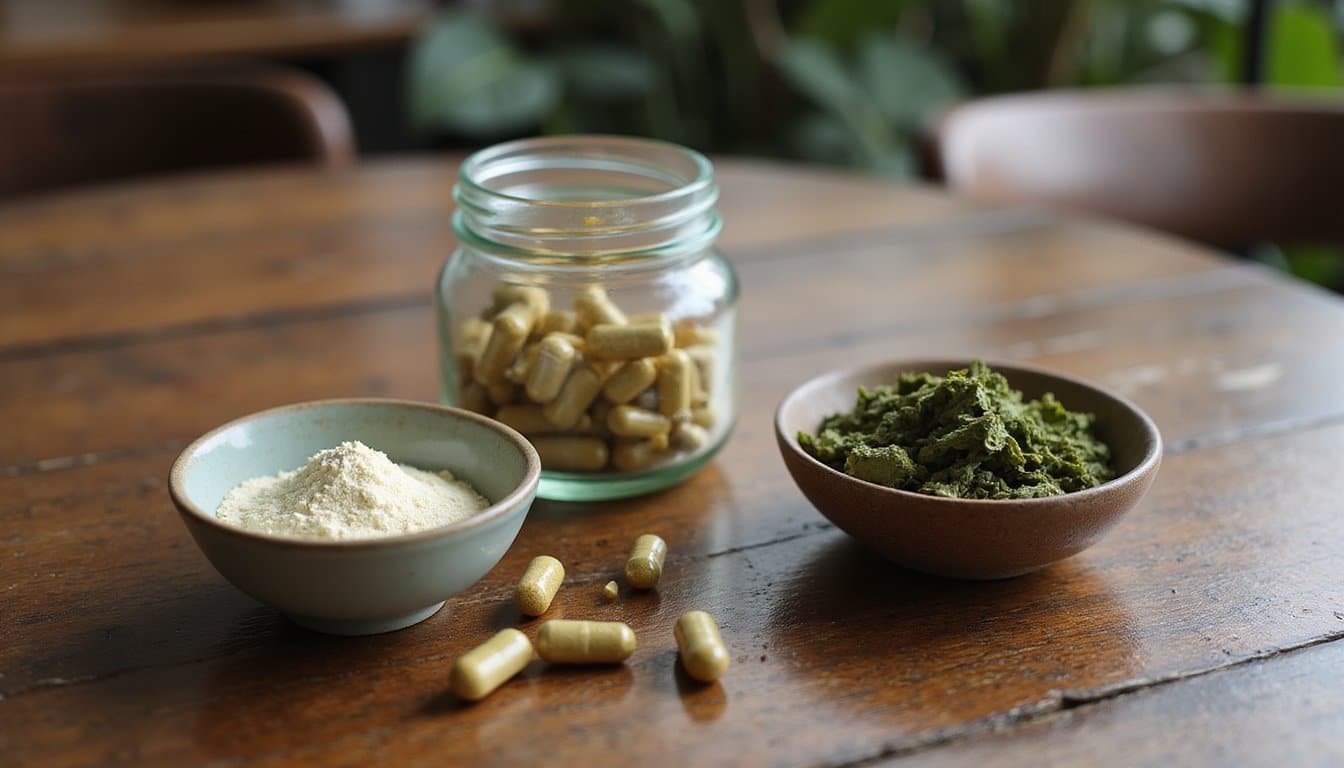
When you mix white kratom products, you can customize your experience by combining powders, capsules, and stem and vein forms in calculated ratios to target specific effects like energy, mental clarity, or balanced relaxation. You’ll find that blending white vein powder with green or red vein products can broaden your alkaloid profile while reducing the overstimulation risk that comes from using white kratom alone. To avoid adverse reactions and tolerance buildup, you should test each product form individually first, record your dosages, and adjust proportions incrementally based on documented body responses.
Mixing White Kratom Benefits
Combining white kratom products, such as powder, capsules, and stem & vein material, can produce distinct alkaloid interactions that may enhance the effects of any single form used alone. When you strategically mix these formats, you’re likely to experience measurable differences across several functional categories:
- Enhanced stimulation, powder-capsule combinations deliver sustained energy via elevated mitragynine concentrations.
- Extended focus duration, stem & vein additions prolong cognitive clarity by introducing unique vein-specific alkaloids.
- Mood and motivation elevation, synergistic alkaloid profiles from mixed formats yield stronger motivational output than isolated forms.
- Tolerance modulation, rotating capsule-powder-stem combinations alters the alkaloid ratio, potentially reducing habituation risk.
You’ll find that these combinations don’t merely duplicate effects, they redistribute alkaloid ratios, producing outcomes that single-format use can’t consistently replicate.
Blending Ratios and Tips
Blending white kratom powder with stem and vein material lets you adjust alkaloid ratios in ways that single-format use can’t replicate. Start with a 1:10 ratio of stem and vein to white powder, then adjust based on individual response. A 20, 30% stem and vein concentration balances stimulation without substantially reducing white kratom’s energizing profile. Avoid equal-part blends, as stem and vein’s lower alkaloid concentration requires higher volume to compensate.
For preparation, grind stem and vein finely before combining with white powder to facilitate even alkaloid distribution. Beginners should keep total blended doses between 1, 2g; moderate users can work within 2, 3g. Store blended products in cool, dry conditions. Rotate blends regularly to reduce tolerance buildup from consistent white kratom use.
Best White Kratom Starting Point for Beginners
For most beginners, white kratom powder offers the most practical entry point because it allows flexible dosing adjustments starting at 1, 2 grams. You can mix it into liquids or food, making consumption more manageable while keeping costs lower than capsule formats.
If you prefer standardized servings, capsules eliminate measurement errors and mask kratom’s bitter taste.
Follow these structured steps before increasing your dose:
- Begin with 1, 2 grams to assess your individual body response.
- Consume in the morning or daytime to align with white kratom’s energizing profile.
- Wait through the full effect window before evaluating results.
- Increase gradually only after confirming tolerance at your initial dose.
Prioritize lab-tested, properly sourced products to minimize contamination risks throughout your adjustment period.
Help Is One Call Away
Struggling with Cannabis addiction doesn’t have to be a journey you take alone. At Vive Treatment Centers, we offer compassionate Marijuana Addiction Treatment and a flexible Intensive Outpatient Program (IOP) to help you take control and move toward lasting recovery. Call (202) 506-3490 today and take the first step toward a healthier life.
Frequently Asked Questions
How Long Does White Kratom Powder Stay Fresh in Storage?
White kratom powder stays fresh for 3, 6 months under ideal conditions, but you can extend its potency up to 1, 2 years if you store it in airtight, vacuum-sealed containers with desiccants, away from heat, light, and moisture. You’ll notice gradual alkaloid degradation after 12, 18 months regardless of storage quality. Keep temperatures below 75°F, use Mylar bags or glass jars with rubber seals, and you’ll maximize its shelf stability efficiently.
Are White Kratom Capsules Made With Gelatin or Vegan-Friendly Shells?
Both options exist for white kratom capsules. You’ll find gelatin capsules made from bovine or porcine sources, often carrying kosher or halal certifications, and they dissolve quickly for faster absorption. You’ll also find vegan alternatives constructed from HPMC (hydroxypropyl methylcellulose) or vegetable cellulose, free from animal by-products, gelatin, and preservatives. Gelatin versions tend to be more affordable, while vegan shells dissolve slower. Always check product labeling to confirm which shell material you’re purchasing.
Can White Kratom Products Cause Dependency With Regular Long-Term Use?
Yes, white kratom products can cause dependency with regular long-term use. When you use them consistently, your body develops tolerance, requiring higher doses to achieve the same effects. You’ll likely experience withdrawal symptoms, body aches, anxiety, insomnia, and cravings, if you stop abruptly. Over time, you may shift from occasional use to daily dosing, prioritizing kratom over responsibilities. Long-term use also carries risks including liver toxicity, cognitive impairment, and cross-tolerance to opioids.
Is White Kratom Legal to Purchase and Use in All States?
White kratom isn’t legal in all states. You can’t purchase or use it in Alabama, Arkansas, Indiana, Louisiana, Vermont, Wisconsin, or Washington D.C. Rhode Island’s ban reverses in April 2026. Local restrictions also apply in areas like Denver and San Diego. You’ll find it legal in 44 states, though age requirements vary between 18 and 21. Always verify your state’s current statutes before purchasing, as legislation’s actively changing.
How Does White Kratom Interact With Common Medications or Supplements?
White kratom interacts with many common medications, and you should approach these combinations cautiously. It inhibits CYP2D6 and CYP3A4 enzymes, causing drugs like antipsychotics and quetiapine to accumulate to toxic levels. When you combine it with CNS depressants, benzodiazepines, alcohol, or barbiturates, you risk severe respiratory depression. It also heightens serotonin activity, endangering users of antidepressants or MAOIs. Additionally, it can destabilize cardiovascular medications, including alpha-blockers and blood thinners.