







If you’re taking Adderall IR, you’ll typically notice effects within 20-60 minutes, with peak concentration occurring around 3 hours after ingestion. Adderall XR takes longer, expect onset within 60-120 minutes, with two distinct peaks at roughly 2 hours and 5-7 hours post-dose. Your individual response depends on factors like metabolism, food intake, and dosage strength. Understanding the specific timing differences between formulations can help you optimize when you take your medication. If you’re taking Adderall IR, you’ll typically notice effects within 20, 60 minutes, with peak concentration occurring around 3 hours after ingestion. This pharmacokinetic profile is also relevant when considering adderall detection time, since the drug’s absorption and peak levels influence how long it remains measurable in the body. Adderall XR takes longer, expect onset within 60, 120 minutes, with two distinct peaks at roughly 2 hours and 5, 7 hours post-dose. These extended-release dynamics can also affect adderall detection time, as the medication is released in phases rather than all at once. Your individual response depends on factors like metabolism, food intake, and dosage strength. Understanding the specific timing differences between formulations can help you optimize when you take your medication while also providing context for typical adderall detection time across different testing methods.”
How Long Does Adderall Take to Kick In?
When you take Adderall, the time it takes to kick in depends primarily on which formulation you’re using. How long does Adderall IR take to work? You’ll typically notice effects within 30 to 60 minutes after ingestion. The immediate-release version enters your bloodstream faster, producing quicker symptom improvement. When you take Adderall, the time it takes to kick in depends primarily on which formulation you’re using. How long does Adderall IR take to work? You’ll typically notice effects within 30 to 60 minutes after ingestion, as the immediate-release version enters your bloodstream quickly and produces faster symptom improvement. Many people also ask how long does adderall last, since this rapid absorption means the therapeutic effects usually persist for several hours before gradually tapering off.
How long does Adderall start working with extended-release? XR formulations require 60 to 120 minutes before effects become noticeable due to their time-based delivery system. This extended-release option provides once-daily dosing convenience, making it beneficial for those who struggle with remembering multiple doses throughout the day.
Understanding how long does Adderall take to work also involves recognizing individual variables. Your metabolism, body weight, hydration levels, and food intake all influence absorption speed. Taking Adderall with food may delay onset slightly. First-time users should start with lower doses to accurately gauge their personal kick-in time.
Adderall IR Onset and Peak Times
Most patients taking Adderall IR experience initial effects within 20 to 60 minutes of administration. This stimulant onset time varies based on your metabolism, hydration levels, and whether you’ve eaten recently. The immediate-release tablet’s uncoated design allows rapid breakdown in your digestive system, enabling quick absorption into your bloodstream.
When considering how long does Adderall take to kick in, you’ll typically notice therapeutic benefits emerging within the first half-hour. Peak plasma concentration occurs approximately 3 hours after ingestion, representing your maximum symptom relief window. During this peak period, you’ll experience ideal focus and cognitive clarity. This enhanced mental performance occurs because Adderall increases dopamine and norepinephrine availability in key brain regions responsible for attention and motivation.
The entire duration spans 4 to 6 hours, requiring multiple daily doses for sustained symptom control. Individual factors including metabolic rate and tolerance development can influence both onset timing and overall effectiveness.
Adderall XR Onset and Peak Times
How does the extended-release formulation differ in its timing profile? When you take Adderall XR, you’ll notice it takes longer to produce effects compared to immediate-release versions. Understanding how long does it take for Adderall to work depends considerably on the formulation you’re prescribed.
For Adderall XR, expect the following timeline:
- Onset occurs within 60, 120 minutes after ingestion
- First peak concentration appears around 1.5, 2 hours
- Second peak reaches approximately 5, 7 hours post-dose
- Total duration extends 10, 12 hours
How long does Adderall XR take to hit? The extended-release mechanism deliberately delays absorption through a two-phase delivery system. This gradual release provides consistent therapeutic effects throughout your day. Individual metabolism and physiology influence your specific timing, though food intake doesn’t markedly alter onset. The medication works by increasing the availability of dopamine and norepinephrine in the brain, which enhances focus and concentration throughout the extended duration.
IR vs. XR: Why They Kick In at Different Speeds
The way your body absorbs Adderall depends heavily on which formulation you’re taking. Immediate-release tablets dissolve quickly in your stomach and enter your bloodstream within 20 to 60 minutes, while extended-release capsules use a dual-bead system that releases medication in two phases over several hours. What you eat before taking either formulation can also influence how rapidly the medication reaches peak concentration in your system.
Immediate Release Mechanism Explained
Understanding why immediate-release and extended-release Adderall formulations activate at different speeds requires examining their distinct delivery mechanisms.
When you take immediate-release Adderall, your body absorbs the full dose at once. This rapid absorption produces noticeable effects within 30 to 60 minutes. Peak plasma concentrations occur approximately 3 hours post-dose, with peak effects typically appearing between 1 to 2 hours after administration. When you take immediate-release Adderall, your body absorbs the full dose at once, producing noticeable effects within about 30 to 60 minutes. Peak plasma concentrations generally occur around 3 hours after ingestion, with peak therapeutic effects typically appearing between 1 and 2 hours post-administration. While these pharmacokinetic patterns describe how quickly the drug acts, they also help explain how long adderall stay in system urine, since the rate of absorption and metabolism influences how long amphetamine metabolites remain detectable in urine screenings.
Key characteristics of immediate-release absorption include:
- Full medication dose enters your bloodstream simultaneously
- Effects become noticeable within 30-60 minutes
- Peak therapeutic effects occur at 1-2 hours
- Total duration spans 4 to 6 hours
This quick onset makes immediate-release suitable for flexible dosing schedules, often requiring 2-3 doses daily. Your metabolism, digestive factors, and food intake can influence individual absorption speed.
Extended Release Bead System
Two distinct bead types inside each Adderall XR capsule explain why extended-release formulations deliver medication differently than immediate-release tablets. Half of these beads dissolve immediately in your stomach’s acidic environment (pH 1.5, 3.5), while the remaining half feature a specialized coating that dissolves later in your small intestine (pH 5.5).
| Feature | IR Beads | ER Beads |
|---|---|---|
| Release Location | Stomach | Small Intestine |
| Activation Time | Immediate | ~4 hours post-dose |
| Peak Concentration | ~3 hours | ~7 hours |
This Microtrol™ technology creates a double-pulsed delivery system. You’ll notice effects within 30-60 minutes as the first bead type activates. The delayed beads then provide a second plasma peak, extending therapeutic coverage to 10-12 hours without requiring multiple daily doses.
Food Effects on Absorption
Beyond the dual-bead delivery system, what you eat, and when you eat it, can influence how quickly Adderall reaches therapeutic levels in your bloodstream.
Food affects IR and XR formulations differently due to their distinct compositions:
- IR tablets dissolve rapidly in stomach acid without protective coating, minimizing food interference
- XR capsules contain specialized bead coatings that may interact with digestive processes
- High-fat meals can delay gastric emptying, potentially slowing absorption timing
- Acidic foods may alter how quickly the medication breaks down in your digestive tract
For IR formulations, the uncoated tablet design enables swift absorption regardless of meal timing. You’ll typically notice effects within 30 to 60 minutes. However, taking XR with food may slightly modify the onset curve without markedly impacting overall therapeutic duration.
How Long Do Adderall Effects Actually Last?
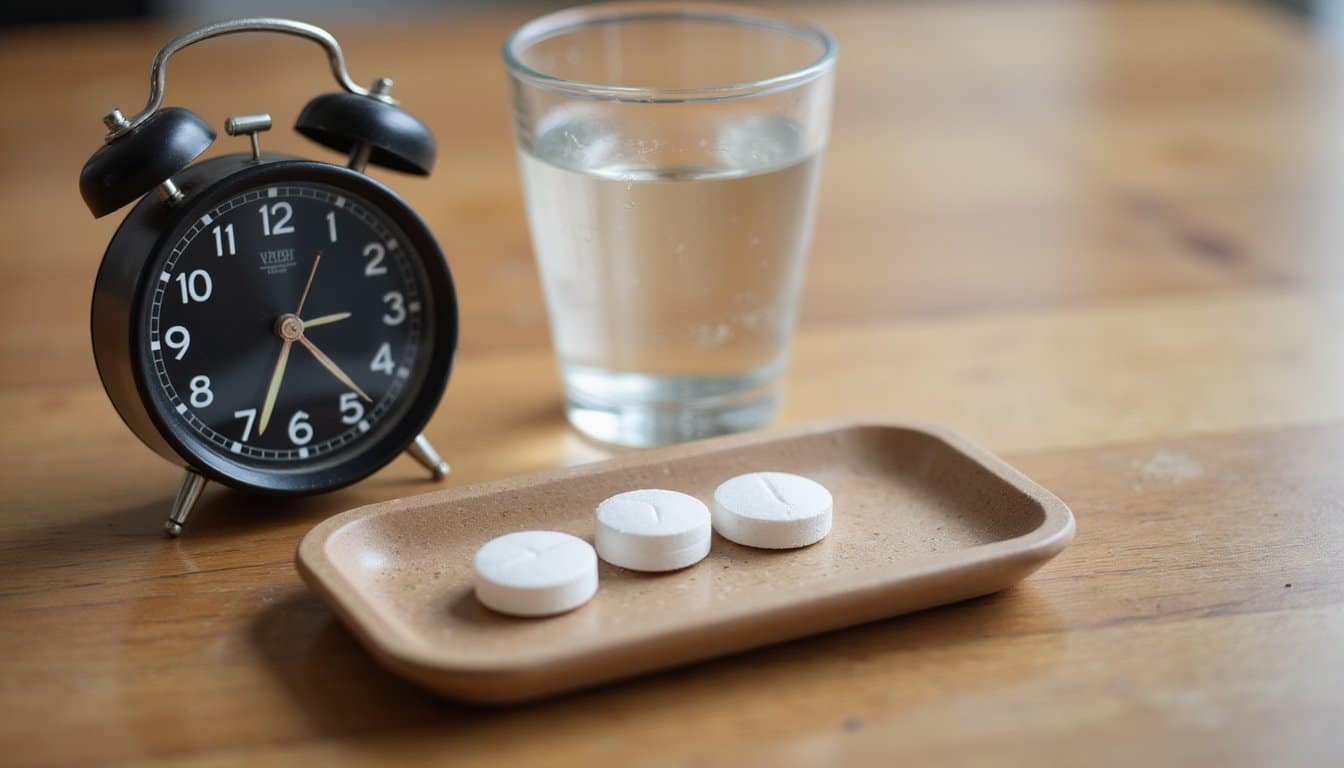
While onset timing tells you when Adderall starts working, duration determines how long you’ll experience symptom relief throughout your day.
IR formulations typically provide 4-6 hours of therapeutic effects, requiring multiple daily doses for continuous coverage. You’ll notice effects ending more abruptly, often accompanied by a noticeable crash that includes fatigue and irritability.
XR formulations deliver sustained relief for 10-12 hours, making a single morning dose sufficient for all-day symptom management. The extended-release mechanism allows effects to subside gradually, helping you avoid the multiple daily crashes associated with IR dosing.
Several factors influence your individual duration: metabolism speed, dosage amount, tolerance development, and frequency of use all affect how long effects persist. A 10mg dose demonstrates this range clearly, lasting approximately 4-6 hours for IR versus up to 12 hours for XR.
What Factors Slow Down Adderall Absorption?
Your body’s gastrointestinal pH plays a critical role in determining how efficiently Adderall crosses intestinal membranes. An acidic environment increases ionization, which reduces the medication’s ability to permeate cell membranes effectively. Citrus juices, vitamin C supplements, and ascorbic acid can lower your GI tract’s pH, directly decreasing absorption rates.
Acidic foods and vitamin C can significantly reduce Adderall absorption by altering your gut’s pH balance.
Several additional factors can slow Adderall’s uptake:
- Gastrointestinal motility disorders like irritable bowel syndrome delay transit time and absorption
- Anticholinergic medications reduce gut motility, prolonging the time before Adderall reaches your bloodstream
- Higher body fat composition slows drug distribution throughout your system
- CYP2D6 genetic variations affect how quickly your liver processes amphetamines
Your individual metabolic rate, hydration status, and age also influence absorption efficiency, creating variability in onset timing between individuals.
Does Food Change How Fast Adderall Works?
What you eat, and when you eat it, directly affects how quickly Adderall enters your bloodstream. Taking Adderall on an empty stomach allows the medication to work within 30 minutes, while consuming it with food, particularly high-fat meals, delays stomach emptying and slows initial absorption. Acidic foods and beverages create an additional barrier by reducing absorption and increasing how quickly your body eliminates the medication.
Empty Stomach Absorption Speed
Taking Adderall on an empty stomach accelerates absorption through the gastrointestinal tract into your bloodstream. Without food slowing gastric emptying, immediate-release formulations typically begin working within 30 minutes. You’ll reach peak plasma concentrations faster under fasting conditions.
This rapid absorption produces several measurable effects:
- Faster onset of therapeutic action
- More pronounced initial drug intensity
- Quicker peak concentration times
- Heightened sensitivity to medication effects
However, accelerated absorption isn’t always advantageous. When the medication enters your system rapidly, you’re more likely to experience intensified side effects alongside the therapeutic benefits. The drug’s effects may feel sharper but potentially less sustained compared to taking it with food. Your individual metabolism and physiology ultimately determine exactly how quickly you’ll notice the medication working.
Acidic Foods Delay Effects
Why do certain foods interfere with Adderall’s effectiveness? Acidic foods and beverages lower your gastrointestinal pH, which increases the ionized form of amphetamine. This ionization hinders the medication’s passage into your bloodstream, reducing absorption and delaying onset.
| Acidic Foods to Avoid | Effect on Adderall |
|---|---|
| Citrus juices (orange, grapefruit) | Reduces absorption |
| Vitamin C supplements | Increases stomach acidity |
| Tomatoes | Alters medication uptake |
| Carbonated beverages | Potentially lowers efficacy |
FDA labeling specifically warns against coadministration with gastrointestinal acidifying agents. If you consume citrus fruits, coffee, or vitamin C near your dose, you’ll likely experience delayed effects and reduced blood levels. For ideal onset timing, you should separate acidic food intake from your immediate-release Adderall by at least one hour.
High-Fat Meal Impact
Beyond acidic foods, high-fat meals create a separate but equally significant barrier to Adderall’s timely absorption. When you consume a high-fat breakfast before your dose, you’ll experience substantial delays in reaching peak concentration.
Clinical studies demonstrate these effects:
- Peak d-amphetamine concentration delays by up to 5 hours after high-fat meals
- Peak l-amphetamine concentration delays by approximately 4.5 hours
- Early drug exposure decreases markedly for up to 8 hours post-dosing
- Extended-release formulations show more pronounced food effects than immediate-release
These findings come from controlled crossover studies using standardized high-fat meals containing 800-1000 calories with 50% fat content. If you need predictable onset timing, you should take Adderall on an empty stomach or maintain consistent eating patterns around your doses.
Why Adderall Affects Everyone Differently
Several biological and behavioral factors determine how quickly and effectively Adderall works in your system. Your genetic makeup plays a significant role, variations in dopamine receptor genes and liver enzyme activity directly influence how your body metabolizes and responds to amphetamines.
Your physiology also matters considerably. Body weight, fat-to-muscle ratio, metabolic rate, and blood-brain barrier permeability all affect drug distribution and effectiveness. Age and organ function, particularly liver and kidney health, alter how long Adderall remains active.
Lifestyle choices impact your response too. Acidic foods decrease absorption, while hydration levels and nutritional status influence metabolism. Your dosing consistency affects tolerance development, irregular adherence can accelerate this process.
Pre-existing health conditions modify reactions as well. Conditions like hypertension or bipolar disorder require careful monitoring, as Adderall may intensify certain symptoms.
How to Time Your Adderall Dose for Best Results
Understanding your individual response to Adderall helps you optimize when you take it. Your prescriber will establish a dosing schedule based on your formulation type and daily demands.
For immediate-release Adderall, you’ll typically follow a structured pattern:
- Take your first dose upon awakening, usually between 7:00-8:00 AM
- Administer a second dose 4-6 hours later, around midday
- Avoid any doses after mid-afternoon to prevent sleep disruption
- Take with food if you experience stomach upset
Extended-release formulations simplify timing considerably. You’ll take a single morning dose that provides 10-12 hours of coverage, aligning peak effectiveness with your school or work hours.
Don’t adjust your schedule without consulting your provider. Weekly monitoring helps identify whether timing refinements could improve your symptom control throughout key daytime periods.
Your Path to Recovery Starts Here
Prescription drug addiction can deeply impact your life or that of someone you care about. Vive Treatment Centers is here to help. Our Prescription Drug Addiction Treatment program uncovers the root causes and supports individuals in building healthier habits with a compassionate team. Call (202) 506-3490 today and start your recovery journey.
Frequently Asked Questions
Can You Crush Adderall XR Beads to Make It Work Faster?
You shouldn’t crush Adderall XR beads. Doing so destroys the time-release mechanism, causing the entire dose to hit your system at once instead of gradually over hours. This greatly increases your overdose risk and can trigger dangerous effects including irregular heartbeat, high blood pressure, seizures, and potentially stroke or sudden death. The FDA specifically prohibits crushing or chewing XR beads, you must swallow them whole as prescribed.
Does Caffeine Interfere With How Quickly Adderall Starts Working?
No direct evidence shows caffeine interferes with how quickly Adderall starts working. While caffeine’s mild acidity could theoretically slow absorption, similar to acidic foods, no studies specifically measure this interaction. What’s clearer is that combining both stimulants may intensify side effects like jitteriness and elevated heart rate. If you’re concerned about onset timing, you’ll find more reliable factors include stomach contents and your individual metabolism rather than caffeine consumption.
Will Adderall Work Faster if Taken Sublingually Under the Tongue?
Sublingual administration could theoretically speed absorption since this route bypasses first-pass metabolism and delivers medication directly into your bloodstream. However, Adderall isn’t formulated for sublingual use, and no direct clinical data supports this method. You’d risk uneven absorption, incomplete dissolution, and potential swallowing of the tablet, reducing any theoretical benefit. You shouldn’t modify how you take prescribed medications without consulting your healthcare provider first.
Does Tolerance Affect How Long Adderall Takes to Kick In?
Tolerance doesn’t appear to affect how long Adderall takes to kick in. Research shows absorption kinetics remain consistent regardless of tolerance buildup, you’ll still experience onset within 20-30 minutes for IR or 1-2 hours for XR. Tolerance primarily involves receptor downregulation, not changes to gastrointestinal absorption. What you may notice instead is shortened perceived duration or reduced effectiveness, which can feel like delayed onset but reflects diminished response rather than altered timing.
Can Antacids Speed up Adderall Absorption and Onset Time?
Yes, antacids can speed up Adderall absorption and onset time. They raise your gastrointestinal pH, creating an alkaline environment that enhances amphetamine absorption into your bloodstream. This increased bioavailability may produce faster-acting effects compared to acidic conditions. However, you shouldn’t take antacids specifically to accelerate Adderall’s effects without medical guidance, as this interaction also intensifies the medication’s strength and prolongs its duration, potentially increasing side effect risks.