





Most people feel psilocybin’s effects within 20 to 40 minutes of ingestion, though onset can range from 15 minutes to 90 minutes depending on how your body processes the compound. Your metabolism, stomach contents, dose size, and preparation method all influence this window. Psilocin becomes detectable in your blood within 30 minutes and reaches peak plasma levels at one to two hours. How you take it changes everything, and the full picture is worth understanding.
How Long Does Psilocybin Actually Take to Kick In?
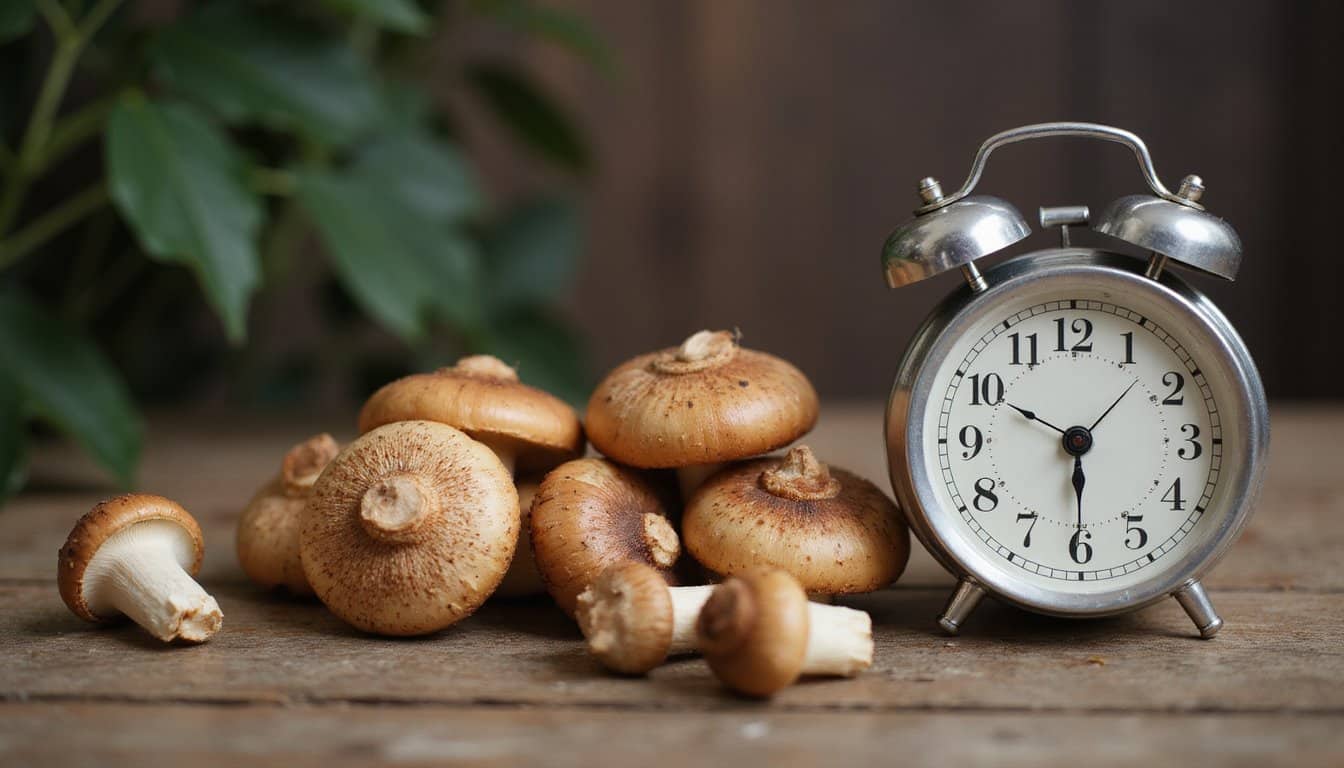
Psilocybin doesn’t kick in the moment you swallow it. After ingestion, your body must first convert psilocybin into psilocin, the active compound responsible for psilocybin effects. This conversion drives psilocybin metabolism and determines when you’ll actually feel something.
For most people, magic mushrooms onset time falls between 20 minutes and 40 minutes. However, the full range extends from as early as 15 minutes to as long as 90 minutes. Psilocin becomes detectable in the blood within 30 minutes, with peak plasma levels reached at one to two hours post-ingestion.
Psilocybin onset time isn’t uniform. Your stomach contents, body composition, dosage, and preparation method all influence how quickly effects begin. First-time users should expect variability and avoid assuming nothing is happening. A lag in onset can lead to early redosing, which is dangerous and can result in overwhelming effects.
What Happens in Your Body Before Psilocybin Kicks In
Once you swallow psilocybin mushrooms, your digestive system begins breaking them down immediately, absorbing psilocybin through the stomach and intestinal lining into your bloodstream. Alkaline phosphatase enzymes then dephosphorylate psilocybin into psilocin, the active compound your body actually uses, with conversion rates reaching 90, 97% during first pass. Because psilocin is lipophilic, it crosses the blood-brain barrier readily, triggering the serotonergic activity at 5-HT2A receptors that produces perceptible effects within 20 to 40 minutes. Once psilocin has been metabolized, it is excreted through urine as the body works to eliminate the compound from your system.
Digestion Begins Immediately
The moment you swallow psilocybin mushrooms, your gastrointestinal system begins processing them. Digestion starts immediately as the compounds travel through your digestive tract, with absorption occurring primarily in the small intestine. The stomach’s acidic environment initiates early processing, while enzymatic dephosphorylation via alkaline phosphatase converts psilocybin into psilocin within intestinal tissues.
First-pass metabolism profoundly affects how quickly psilocin enters systemic circulation. Your liver and gut biotransform the compound before it reaches the bloodstream, influencing distribution timing. These pre-onset physiological changes occur before you notice any effects.
Your body composition, dose size, and individual metabolism all determine how efficiently this process unfolds. Higher body fat, slower enzyme activity, or larger doses can alter clearance rates, directly affecting how soon psilocybin’s effects emerge. Psilocybin is primarily taken orally, though intravenous injection is used exclusively by licensed researchers, making the digestive pathway the standard route through which onset timing is experienced.
Psilocybin Converts to Psilocin
After you swallow psilocybin mushrooms, your body doesn’t actually use psilocybin as the active compound, it converts it first. Through dephosphorylation, alkaline phosphatase enzymes strip psilocybin’s phosphate group, producing psilocin at a 90, 97% conversion rate across intestinal, hepatic, renal, and blood tissues. No psilocybin is detectable in blood after oral administration, confirming complete first-pass conversion.
Psilocin’s increased lipophilicity allows it to cross the blood-brain barrier readily, where it binds serotonin receptors, primarily 5-HT2A, triggering psychedelic effects. Your body then clears psilocin through CYP2D6 and CYP3A4 metabolism, glucuronidation via UGT1A10 and UGT1A9, and minor oxidation pathways producing metabolites like 4-HIAA and psilocin-O-glucuronide. Psilocin’s elimination half-life ranges from 1.5 to 4 hours, defining how long effects persist.
Blood Absorption Triggers Effects
Swallowing psilocybin mushrooms sets off a precise biochemical sequence before you feel anything at all. Gastrointestinal absorption begins immediately, with psilocybin entering the bloodstream within 20 to 40 minutes. First-pass metabolism impact is substantial, converting 90, 97% of psilocybin into psilocin during hepatic processing.
Key pharmacokinetic milestones govern your onset timing:
- Psilocin detection in blood occurs around 30 minutes post-ingestion
- Psilocin conversion reaches near-completion through liver dephosphorylation before systemic circulation
- Distribution to tissues is extensive, with psilocin’s volume of distribution reaching up to 1,267 L
- Peak concentration factors place Tmax at 1.8, 4 hours, with Cmax scaling dose-dependently
Bloodstream entry and detection precede psychoactive effects because psilocybin absorption time reflects both gastrointestinal transit and hepatic processing before psilocin crosses the blood-brain barrier.
Why Psilocybin Onset Time Varies So Much Between People
Your body’s metabolic rate directly shapes how quickly psilocybin converts to psilocin, meaning faster metabolism, common in younger individuals with efficient liver enzyme activity, produces earlier onset compared to slower metabolic profiles. Genetic polymorphisms in cytochrome P450 enzymes create measurable differences in processing speed, so two people consuming identical doses can experience onset times ranging from 20 minutes to over an hour. Dosage and strain potency compound this variability further, as higher concentrations accelerate both absorption rate and intensity of initial effects.
Metabolism and Absorption Differences
Once psilocybin enters the body, a cascade of enzymatic processes determines how quickly and robustly you’ll feel its effects. Alkaline phosphatase converts psilocybin into active psilocin, which CYP2D6 and CYP3A4 then metabolize. MAO-A breaks psilocin into secondary metabolites, while UDP-glucuronosyltransferases handle glucuronidation in tissue-specific locations.
Your route of administration matters considerably:
- Oral administration delays absorption through gastrointestinal transit and first-pass metabolism, peaking around 1.6, 2 hours
- Intravenous administration bypasses first-pass metabolism entirely, producing faster, higher plasma concentrations
- Stomach contents alter gastrointestinal transit speed, directly shifting your onset window
- Individual CYP enzyme expression affects how efficiently your body processes psilocin
These variables compound unpredictably, explaining why two people consuming identical doses can experience dramatically different onset times and intensity levels.
Dosage and Potency Variability
Beyond metabolism and absorption, dosage and potency variability are among the strongest predictors of why your onset timeline can shift tremendously from one experience to the next. Higher doses accelerate onset and intensify effects, while low doses can delay noticeable effects up to 90 minutes. Potent strains with elevated psilocybin content shorten onset beyond the standard 20-minute threshold and push peak effects earlier, around 1 to 2 hours post-ingestion. Even identical batches carry potency variability, meaning your timing won’t always match previous experiences. Tolerance further complicates this, recent psychedelic use delays onset and reduces intensity. Concurrent SSRIs can block or vastly prolong effects through direct pharmacological interactions. Understanding how dosage, strain potency, tolerance, and drug interactions collectively influence timing helps you anticipate a more accurate onset window.
Does Mushroom Tea Really Hit Faster Than Dried Shrooms?
When you brew psilocybin mushrooms into tea, the effects typically onset within 10 to 20 minutes, noticeably faster than the 30 to 60 minutes associated with eating dried mushrooms whole. Tea preparation enhances bioavailability through hot water extraction, releasing psilocybin before it enters your digestive system. Lemon tekking produces intermediate absorption speed, as acidic chemical conversion may pre-convert psilocybin into psilocin before ingestion.
Key differences between preparation methods include:
- Mushroom tea: onset effects at 10, 20 minutes
- Lemon tekking: onset at 15, 30 minutes
- Dried mushrooms: standard onset at 30, 60 minutes
- Duration: tea and dried mushrooms both last 4, 6 hours
Faster absorption doesn’t shorten total trip duration, dosage and individual metabolism remain the primary factors influencing the overall experience.
Empty Stomach vs. Full Stomach: How Food Changes Everything
Whether you eat before taking shrooms profoundly impacts how quickly and intensely the effects hit you. On an empty stomach, you’ll typically feel onset within 20 to 40 minutes, as psilocybin absorbs rapidly without competing digestive processes slowing conversion to psilocin. A full stomach delays that onset to anywhere between 30 and 90 minutes and softens peak intensity, so timing your last meal strategically, ideally 2 to 4 hours before ingestion, gives you both predictable kinetics and reduced nausea risk.
Empty Stomach Faster Onset
What you eat before taking psilocybin mushrooms directly shapes how quickly and intensely the effects arrive. On an empty stomach, psilocybin onset begins within 20, 40 minutes, as there’s no food competition slowing absorption. Your body converts psilocybin to psilocin faster, producing stronger, more predictable effects.
Key clinical considerations include:
- Empty stomach accelerates the absorption mechanism, reducing onset time to as little as 20 minutes
- Full stomach delays onset to 30, 90 minutes, softening intensity through slower stomach contents processing
- Nausea increases on an empty stomach, making discomfort a common early indicator of absorption
- Clinical advice recommends fasting 2, 4 hours beforehand, balancing quicker psilocybin onset against nausea risk
Timing your fast carefully guarantees reliable absorption without unnecessary physical discomfort during the onset phase.
Food Delays Absorption Significantly
While fasting accelerates psilocybin absorption, eating before your dose produces the opposite effect, and the difference is significant. Food in your stomach delays onset by 30 to 90 minutes beyond the standard 20 to 40-minute window. Your digestive system prioritizes processing the meal, reducing rapid psilocybin uptake and introducing notable timing variability.
Pharmacokinetics explain this clearly. Food competes for digestive resources, slowing gastrointestinal passage and potentially lowering peak psilocin levels. Meal composition matters too, high-carbohydrate meals affect serotonin pathways, subtly influencing experience character beyond just absorption timing.
Importantly, a full stomach delays onset without extending total duration. Your trip still lasts 4 to 8 hours from actual onset. The stomach’s contents shift when effects begin, not how long they last.
Optimal Timing Strategies
Timing your dose around food intake is one of the most controllable variables in shaping your psilocybin experience. Empty stomach onset accelerates gastric emptying, improving bioavailability and shortening onset time to 15, 30 minutes. Full stomach onset delays effects up to 120 minutes while reducing peak plasma concentrations.
Applying light meal strategies optimizes your experience:
- Eat 2, 4 hours before dosing to support gastric emptying while maintaining glycemic stability
- Prioritize carbohydrates to support serotonin precursor uptake without slowing absorption
- Use ginger to address nausea considerations, particularly on an empty stomach
- Expect consistent duration impacts, food delays onset but doesn’t extend total trip length beyond 4, 8 hours
Controlling food timing lets you modulate intensity, manage nausea, and predict onset more reliably.
The First Signs Shrooms Are Starting to Work
The first signs that psilocybin is taking effect typically emerge within 20 to 40 minutes of ingestion, though the exact onset depends on your method of consumption, stomach contents, and individual metabolism. During the come-up, initial effects often include physical sensations like light buzzing, warmth, or tingling in your limbs and face. Visual changes follow shortly after, with colors appearing richer and lights seeming brighter. Sensory changes intensify as contrast sharpens and surfaces may appear to breathe subtly. Mental awareness shifts noticeably, bringing heightened focus, slower associative thinking, and increased sound sensitivity. Emotional responses during this phase vary, ranging from mild excitement to acute anxiety. Nausea is also common during early onset. Recognizing these effects early helps you avoid premature redosing.
When Do Shrooms Peak and How Long Does It Last?
Once you recognize the early signs that psilocybin is taking effect, the experience moves quickly toward its most intense phase. Following psilocybin mushrooms onset, peak timing typically occurs between 1.5 to 3 hours after ingestion, with peak duration lasting 1 to 4 hours depending on influencing factors like dosage, metabolism, and stomach contents. Once you recognize the early signs that psilocybin is taking effect, the experience moves quickly toward its most intense phase, which is why many people ask how long do shroom effects last when tracking the progression. Following psilocybin mushrooms onset, peak timing typically occurs between 1.5 to 3 hours after ingestion, with peak duration lasting 1 to 4 hours depending on influencing factors like dosage, metabolism, and stomach contents. Once you recognize the early signs that psilocybin is taking effect, the experience moves quickly toward its most intense phase, which is why many people ask how long do shroom effects last or how long do shroom edibles take to kick in when tracking the progression. Following psilocybin mushrooms onset, peak timing typically occurs between 1.5 to 3 hours after ingestion, with peak duration lasting 1 to 4 hours depending on influencing factors like dosage, metabolism, and stomach contents.
Peak effects characteristics include:
- Visual distortions ranging from mild geometric patterns to vivid hallucinations
- Cognitive alterations such as distorted time perception and deep introspection
- Emotional changes including ego dissolution and heightened sensory intensity
- Strongest hallucinations concentrated between 2 to 3 hours post-ingestion
After peak effects subside, a gradual comedown follows over 2 to 4 hours, with mental clarity slowly returning while residual visuals may linger.
How Long Does a Psilocybin Trip Actually Last?

How long a psilocybin trip actually lasts depends on several interacting variables, but most experiences follow a predictable window of 4 to 6 hours from ingestion to full comedown. With psilocybin mushrooms, you’ll typically reach peak intensity 2 to 3 hours after ingestion, where the psychedelic experience is most pronounced. Following standard onset, effects fade gradually rather than abruptly, with the comedown spanning 2 to 4 hours post-peak. How long a psilocybin trip actually lasts depends on several interacting variables, but most experiences follow a predictable window of 4 to 6 hours from ingestion to full comedown, forming a consistent mushroom trip timeline. With psilocybin mushrooms, you’ll typically reach peak intensity 2 to 3 hours after ingestion, where the psychedelic experience is most pronounced. Following standard onset, effects fade gradually rather than abruptly, with the comedown spanning 2 to 4 hours post-peak.
Dosage profoundly influences trip duration. Low to moderate doses align with the 4 to 6 hour standard, while higher doses can extend effects toward 8 hours. Beyond 6 hours, you may notice residual afterglow, calm, emotional clarity, or mild fatigue, persisting well into the following hours. Full return to baseline typically occurs within 24 hours.
Why People Redose Too Early and How to Stop It
Knowing a trip lasts 4 to 6 hours doesn’t fully protect you if you misjudge the first 90 minutes. Early effects like heightened sensory perception and heightened emotions begin at 20, 40 minutes, but effects intensify during the build-up phase closer to 90 minutes. Many users expect a quick timeline and redose before reaching peak effects, triggering overwhelming delayed effects.
Common redosing triggers include:
- Assuming body weight requires higher doses
- Mistaking the slow build-up for a failed dose
- Expecting emotional clarity or visuals within 30 minutes
- Confusing subtle early effects with insufficient dosing
Poison center calls rose 201% in adults between 2019, 2023, largely tied to premature redosing. A fixed 25 mg dose needs no adjustment. Wait the full 90 minutes before reconsidering anything.
What to Expect After a Psilocybin Trip Is Over
The trip ending doesn’t mean the experience is over. Afterglow effects often include enhanced mood, increased empathy, and mental clarity persisting 12, 24 hours post-trip. You may notice continued emotional shifts and insights extending days beyond your last dose.
Physical aftereffects are common. Expect fatigue, mild headaches, or mental fogginess lasting 1, 2 days. Nausea typically resolves within hours of peak effects subsiding.
Psychological residue varies. Positive experiences leave lingering ease and introspection, while negative trips can produce lingering unease or psychological scarring. HPPD and exacerbation of pre-existing mental health conditions represent potential risks post-trip.
Regarding detection and excretion, 66% of compounds clear within 3 hours. Psilocybin becomes undetectable in urine after 24 hours, though subtle effects may persist 12, 24 hours despite full metabolic clearance.
Real Help, Real Results Call Now
Frequently Asked Questions
Can Anxiety or Stress Affect How Quickly Psilocybin Begins Working?
Yes, anxiety and stress can delay psilocybin’s onset beyond the typical 20, 40 minutes, sometimes extending it to 90 minutes. When you’re stressed, elevated cortisol may interfere with psilocin conversion, while anxiety-induced stomach tension slows absorption similarly to eating beforehand. A stressful setting also heightens physical sensations like nausea, masking early mental effects. Maintaining a calm mindset and comfortable environment helps keep your onset within the standard 20, 60 minute window.
Does Psilocybin Onset Time Differ Between Psilocybe Cubensis and Other Species?
Psilocybe cubensis and other psilocybin species don’t show significant onset differences, you’re typically looking at 20 to 40 minutes across most species. While Psilocybe azurescens carries higher potency, potentially creating a perceived faster onset, no quantified species-specific deviations are currently documented. The variables that actually influence your onset time, stomach contents, metabolism, dosage, and body composition, affect all psilocybin species uniformly, making these factors more clinically relevant than species selection alone.
How Does Psilocybin Onset Compare Between First-Time and Experienced Users?
If you’re a first-time user, you’ll typically wait 30 to 90 minutes before noticing effects, and you’re more likely to feel anxious during that window. If you’re experienced, you’ll often detect onset within 15 to 40 minutes, with less anticipatory distress. Both groups reach peak plasma concentrations at 90 to 120 minutes post-ingestion. First-timers face greater unpredictability, increasing premature redosing risk, while experienced users recognize subtle early perceptual shifts more reliably.
Can Medications or Supplements Interfere With Psilocybin Absorption and Onset Timing?
Yes, medications and supplements can interfere with psilocybin absorption and onset timing. SSRIs and MAOIs are particularly significant, as they interact directly with serotonin pathways that psilocin targets. Antacids may alter stomach pH, affecting absorption rates. If you’re taking lithium, the combination carries serious seizure risks. St. John’s Wort can also blunt psychedelic effects. You should always consult a healthcare professional before combining psilocybin with any medication or supplement.
Does Body Weight or Composition Significantly Change When Psilocybin Effects Begin?
Your body weight and composition can moderately influence when psilocybin effects begin, but they’re not the dominant factor. Heavier individuals may experience slightly altered absorption timelines due to differences in pharmacokinetics and fat distribution, which affects how psilocin distributes throughout your system. Your metabolic rate matters more substantially, as faster metabolism accelerates psilocybin’s conversion to psilocin. Onset still typically falls within 20 to 60 minutes regardless of body composition variations.